
Drunk driving accident injury claims in New York can involve both civil injury issues and separate criminal or traffic-related proceedings. An injured person may need to deal with medical care, no-fault benefits, police reports, insurance claims, serious injury rules, evidence of intoxication, and settlement negotiations at the same time. A car accident attorney resource can help explain how liability, medical records, insurance coverage, and damages are generally evaluated after an alcohol-related crash.
Quick Answer
A drunk driving accident injury claim in New York usually requires proof that the impaired driver caused or contributed to the crash and that the crash caused the injured person’s damages. Important evidence may include the police report, arrest information, breath or blood test details, witness statements, dashcam footage, surveillance video, vehicle damage photos, medical records, no-fault documents, insurance letters, and proof of lost income or long-term limitations. A criminal DWI case may help provide evidence, but the injury claim is a separate civil matter.
Key Takeaways
- A drunk driving crash can involve both a criminal or traffic case and a separate civil personal injury claim.
- New York Vehicle and Traffic Law § 1192 addresses alcohol, drug, and combined alcohol-and-drug impaired driving offenses. NYSenate.gov
- New York DMV guidance states that a BAC over .05 percent is legal evidence of impairment, .08 percent or higher is evidence of intoxication, and .18 percent or more is evidence of aggravated driving while intoxicated. NY DMV
- New York DMV’s MV-104 form states that crashes involving injury, death, or more than $1,000 in property damage to any one person must be reported within 10 days. NY DMV
- New York no-fault written notice generally must be submitted as soon as reasonably practicable, but no more than 30 days after the accident unless there is a clear and reasonable justification for late notice. Department of Financial Services
- Comparative fault can still be reviewed if the injured person is accused of contributing to the crash. NYSenate.gov
- New York Courts lists three years for car accident claims and many negligence-based personal injury claims, but shorter insurance, no-fault, municipal, or policy deadlines may apply. New York Courts
What Is a Drunk Driving Accident Claim?
A drunk driving accident claim is a civil injury claim that may arise when an impaired driver causes or contributes to a crash. The claim usually focuses on fault, injuries, insurance coverage, medical expenses, lost income, pain and suffering, future care, and other damages.
A drunk driving accident claim may involve:
- Alcohol impairment
- Drug impairment
- Combined alcohol and drug impairment
- Aggravated DWI allegations
- Police investigation
- Breath or blood testing
- Arrest records
- Traffic tickets
- Criminal court proceedings
- No-fault insurance
- Bodily injury liability coverage
- Serious injury evidence
- Comparative fault arguments
- Policy limit issues
The civil claim is not the same as the criminal case. The criminal case addresses charges brought by the government. The civil claim addresses the injured person’s losses.
Civil Injury Claim vs. Criminal DWI Case
A drunk driving crash may lead to criminal charges, but the injured person’s financial recovery is usually handled through a separate civil claim or lawsuit. These two tracks can overlap, but they do not serve the same purpose.
A criminal or traffic case may address:
- Arrest
- Charges
- Plea negotiations
- Fines
- License consequences
- Probation
- Jail exposure
- Court-ordered programs
- Criminal responsibility
A civil injury claim may address:
- Medical bills
- Lost income
- Pain and suffering
- Future medical care
- Permanent limitations
- Vehicle damage
- Insurance coverage
- Settlement value
- Lawsuit damages
- Wrongful death damages, when applicable
A conviction may be useful evidence, but the injured person still needs to prove damages, medical causation, and insurance issues in the civil claim.
New York DWI and DWAI Rules
New York law uses several alcohol and drug-related driving categories. Vehicle and Traffic Law § 1192 includes driving while ability impaired, driving while intoxicated, driving with .08 of one percent or more blood alcohol content, driving while ability impaired by drugs, and driving while impaired by the combined influence of drugs or of alcohol and any drug. NYSenate.gov
New York DMV guidance explains common BAC-related categories:
- More than .05 percent BAC can be legal evidence of impairment.
- .08 percent BAC or higher can be evidence of intoxication.
- .18 percent BAC or higher can be evidence of aggravated driving while intoxicated. NY DMV
For an injury claim, the important issue is not only the charge. The claim must also connect the impaired driving to the crash and connect the crash to the injuries.
Why Drunk Driving Claims Can Be Complex
Some drunk driving accident claims appear straightforward because intoxication suggests dangerous conduct. However, the insurance claim can still become complicated.
Complications may include:
- The impaired driver denies fault.
- The driver disputes the BAC result.
- The police report is incomplete.
- The criminal case is still pending.
- Multiple vehicles were involved.
- Several people were injured.
- The impaired driver has low insurance limits.
- The vehicle owner is different from the driver.
- A bar, restaurant, employer, or other party may need review.
- The injured person has pre-existing conditions.
- No-fault benefits are delayed or denied.
- The insurer disputes serious injury.
- Comparative fault is alleged.
A strong claim should rely on evidence, not only the fact that the other driver was arrested.
Common Types of Drunk Driving Crashes
Alcohol and drug impairment can affect judgment, reaction time, attention, speed control, lane position, and decision-making. Drunk driving crashes may happen in many different ways.
Common crash types include:
- Rear-end collisions
- T-bone crashes
- Head-on collisions
- Wrong-way crashes
- Pedestrian accidents
- Bicycle accidents
- Motorcycle crashes
- Lane departure crashes
- Sideswipe collisions
- Highway crashes
- Parking lot crashes
- Hit-and-run crashes
- Multi-vehicle accidents
- Crashes involving commercial vehicles
- Rideshare or taxi crashes
The type of crash may affect the evidence needed to prove liability and damages.
Common Injuries in Drunk Driving Accidents
Drunk driving accidents can cause severe injuries because impaired drivers may speed, fail to brake, cross lanes, run red lights, or crash at dangerous angles.
Common injuries may include:
- Head injuries
- Concussions
- Neck injuries
- Back injuries
- Disc injuries
- Spinal cord injuries
- Fractures
- Shoulder injuries
- Knee injuries
- Hip injuries
- Internal injuries
- Chest injuries
- Facial injuries
- Scarring
- Burns
- Nerve damage
- Psychological trauma
- Wrongful death
Medical documentation is essential because the civil claim must show what injuries were caused by the crash and how those injuries affected the person’s life.
Medical Records and Injury Documentation
Medical records help connect the crash to the injuries. They also show diagnosis, treatment, symptoms, restrictions, medical bills, and future care needs.
Important medical records may include:
- Ambulance records
- Emergency room records
- Hospital records
- Surgery records
- Imaging reports
- Orthopedic records
- Neurology records
- Pain management records
- Physical therapy notes
- Chiropractic records
- Primary care records
- Prescription records
- Work restriction notes
- Future care recommendations
- Mental health records, when relevant
A claim may be harder to prove if treatment is delayed, symptoms are not reported clearly, or medical records do not connect the injury to the crash.
No-Fault Benefits After a Drunk Driving Crash
New York no-fault benefits may cover certain economic losses after many motor vehicle accidents, regardless of who caused the crash. These benefits may help pay medical bills, lost earnings, prescriptions, transportation to medical appointments, and certain other reasonable and necessary expenses.
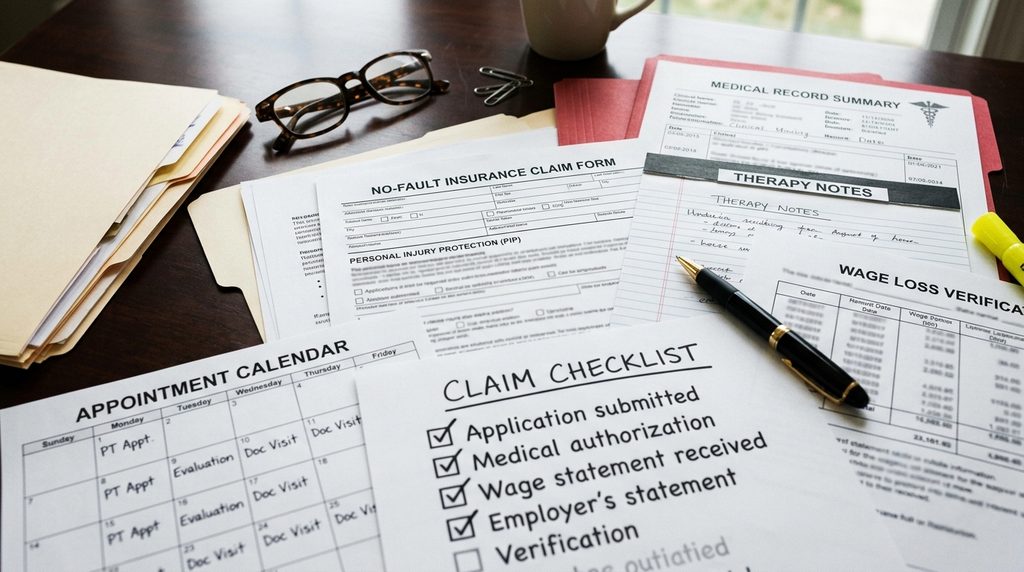
New York DFS explains that written no-fault notice must generally be given to the applicable no-fault insurer as soon as reasonably practicable, but no more than 30 days after the accident unless there is a clear and reasonable justification for late notice. Department of Financial Services
No-fault benefits may cover:
- Emergency care
- Hospital bills
- Doctor visits
- Physical therapy
- Chiropractic care
- Diagnostic testing
- Prescription medication
- Lost earnings
- Transportation to medical care
- Certain other accident-related expenses
A broader guide to the New York no-fault insurance system can help explain how first-party benefits, medical bill submissions, wage claims, and insurance timing may work after a crash.
No-Fault Is Separate From the Claim Against the Drunk Driver
No-fault benefits are usually separate from the bodily injury claim against the impaired driver. No-fault may help with certain economic losses early in the claim, while the claim against the drunk driver may address pain and suffering, additional damages, and losses not fully covered by no-fault.
The injury claim against the impaired driver may involve:
- Proof of fault
- Proof of intoxication
- Serious injury evidence
- Pain and suffering
- Lost income beyond no-fault
- Future care
- Permanent limitations
- Insurance policy limits
- Settlement negotiations
- Litigation, when needed
The injured person may need to pursue both no-fault benefits and a liability claim.
Pain and Suffering After a Drunk Driving Accident
Pain and suffering may include physical pain, emotional distress, reduced mobility, anxiety, scarring, disability, sleep disruption, and loss of normal activities. In many New York motor vehicle claims, pain and suffering recovery requires proof of serious injury under Insurance Law § 5102.
Serious injury categories include death, dismemberment, significant disfigurement, fracture, loss of fetus, permanent loss of use, permanent consequential limitation, significant limitation, and certain 90/180-day impairments. Department of Financial Services
Serious injury evidence may include:
- Fracture records
- MRI reports
- CT scans
- Surgical records
- Specialist reports
- Range-of-motion testing
- Permanent limitation opinions
- Therapy records
- Work restriction notes
- Scarring photos
- Disability documentation
- Future care recommendations
Evidence of drunk driving may support liability, but medical evidence supports the injury and damages.
Evidence Needed in a Drunk Driving Accident Claim
A drunk driving accident claim should document both the driver’s conduct and the injured person’s damages. A broader guide to evidence for personal injury claims can help explain why reports, photos, medical records, witness details, and insurance documents often need to support the same timeline.
Useful evidence may include:
- Police report
- DMV MV-104 report
- Arrest information
- Traffic tickets
- Breath test information
- Blood test information
- Field sobriety test information
- Dashcam footage
- Body camera footage, when available
- Witness statements
- Bar or restaurant receipts, when relevant
- Surveillance footage
- Vehicle damage photos
- Scene photos
- Medical records
- Medical bills
- Work restriction notes
- Lost wage records
- No-fault documents
- Insurance correspondence
- Criminal court disposition, when available
The strongest claim usually connects intoxication, crash conduct, medical injuries, and damages in a clear sequence.
Police Reports and Crash Reports
Police reports are often central in drunk driving claims because officers may document observations, driver statements, field sobriety testing, odor of alcohol, traffic citations, arrests, injuries, witnesses, crash diagrams, and insurance information.
New York DMV’s MV-104 form states that crashes causing a fatality, personal injury, or more than $1,000 in damage to any one person’s property must be reported within 10 days. NY DMV
Useful report information may include:
- Crash date and time
- Exact location
- Driver information
- Insurance information
- Injury notation
- Vehicle damage
- Witness names
- Officer observations
- Citation details
- Arrest details
- Apparent contributing factors
- Crash diagram
- Narrative description
A police report may not include every detail, so supporting evidence may still be needed.
Breath, Blood, and Chemical Test Evidence
Chemical testing can become important when alcohol or drug impairment is disputed. Vehicle and Traffic Law § 1194 addresses chemical tests and related procedures in impaired driving matters.
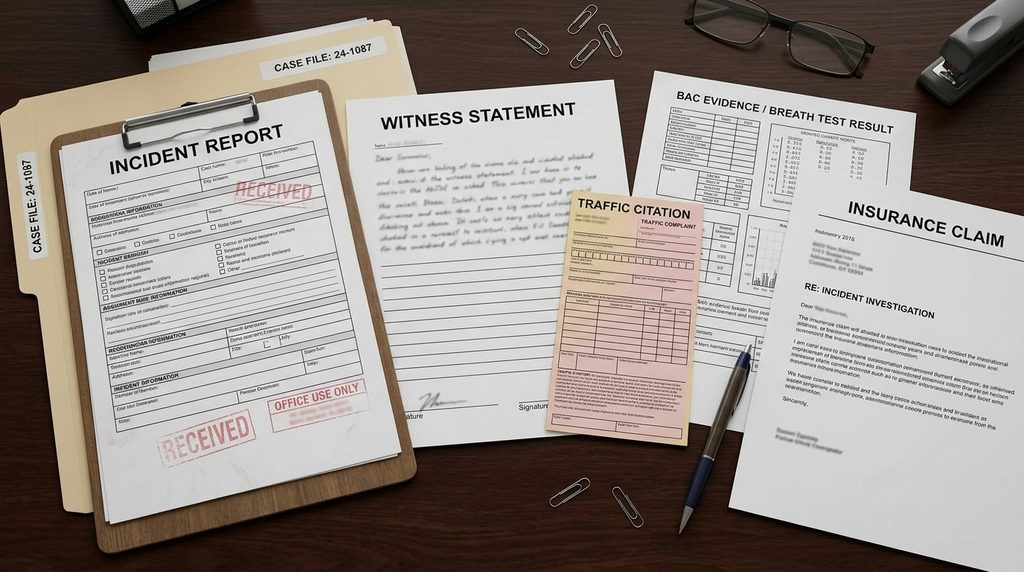
Chemical test evidence may involve:
- Breath test results
- Blood test results
- Urine test results
- Timing of the test
- Refusal issues
- Chain of custody
- Police documentation
- Criminal court records
- Expert interpretation, when needed
In a civil claim, test results may help show intoxication or impairment, but the claim still needs evidence that the impaired driving caused or contributed to the crash.
Field Sobriety and Officer Observations
Not every drunk driving claim depends only on a BAC number. Officer observations and field sobriety evidence may also matter.
Evidence may include:
- Slurred speech
- Odor of alcohol
- Bloodshot or watery eyes
- Unsteady balance
- Admission of drinking
- Open containers
- Failed field sobriety tests
- Erratic driving before the crash
- Unsafe lane movement
- Delayed braking
- Running a red light
- Driving without headlights
- Wrong-way driving
- Leaving the scene
These facts may help show impairment even when chemical test details are limited or disputed.
Witness Statements
Witnesses can be especially important in drunk driving claims. They may have seen the driver drinking, driving erratically, speeding, crossing lanes, running a light, or acting impaired after the crash.
Witnesses may provide information about:
- Vehicle movement before impact
- Driver behavior after the crash
- Smell of alcohol
- Slurred speech
- Open containers
- Driver admissions
- Passenger statements
- Bar or restaurant departure
- Traffic signal status
- Speed
- Braking
- Lane movement
- Whether the driver tried to leave
Witness information should be preserved quickly because memories fade and witnesses may become hard to reach.
Video Evidence and Surveillance Footage
Video can be powerful in alcohol-related crash claims. It may show the driver’s movement before the crash, driving pattern, traffic signal, impact, behavior after the crash, or whether the driver tried to leave.
Potential video sources include:
- Dashcams
- Traffic cameras
- Business surveillance cameras
- Gas station cameras
- Parking lot cameras
- Bar or restaurant cameras
- Doorbell cameras
- Police body camera footage
- Patrol car dashcam footage
- Rideshare vehicle cameras
- Truck or bus cameras
Video may be overwritten quickly. Preservation requests should be made as early as possible.
Bar, Restaurant, or Social Host Evidence
Some drunk driving claims may require reviewing where the driver was before the crash. This does not mean a bar, restaurant, or other party is automatically liable. It means the facts may need to be investigated when alcohol service, visible intoxication, or other circumstances may be relevant.
Potential evidence may include:
- Receipts
- Credit card records
- Surveillance footage
- Witness statements
- Server observations
- Time of purchase
- Type and amount of alcohol served
- Transportation arrangements
- Social media posts
- Event records
Any claim against a third party requires careful legal and factual review. The injured person should not assume that every alcohol-related crash creates a claim against a business.
Drunk Driving and Hit-and-Run Crashes
Some impaired drivers leave the scene after a crash. This can create additional evidence and insurance issues, especially if the driver is not identified quickly.
Hit-and-run drunk driving evidence may include:
- Police report
- Vehicle description
- License plate details
- Witness statements
- Dashcam footage
- Surveillance footage
- Debris at the scene
- Vehicle damage
- Arrest records, if later found
- Insurance denial letters
- UM or SUM claim documents
- MVAIC documents, when applicable
Leaving the scene can make evidence preservation more urgent.
Drunk Driving and Pedestrian Accidents
Drunk driving pedestrian accidents can cause severe injuries because pedestrians have no physical protection. These claims may involve crosswalk evidence, traffic signals, visibility, speed, intoxication evidence, and medical damages.
Important evidence may include:
- Police report
- Crosswalk photos
- Traffic signal evidence
- Vehicle damage photos
- Witness statements
- Video footage
- Driver BAC information
- Medical records
- Work restriction notes
- Insurance documents
A pedestrian accident attorney resource may help explain why right of way, driver attention, medical records, and accident evidence often matter in these claims.
Drunk Driving and Bicycle Accidents
Bicyclists may suffer serious injuries when struck by impaired drivers. These claims may involve lane position, visibility, lighting, speed, intoxication evidence, and vehicle movement before impact.
Useful evidence may include:
- Bicycle damage photos
- Helmet photos
- Clothing photos
- Scene photos
- Witness statements
- Video footage
- Police report
- Driver arrest details
- Medical records
- Roadway condition details
- Insurance documents
A bicycle accident attorney resource may help explain why evidence preservation and medical documentation can be important after a bike crash.
Drunk Driving and Motorcycle Accidents
Motorcyclists can suffer severe injuries when impaired drivers fail to yield, drift lanes, make unsafe turns, or misjudge speed and distance. These claims may involve serious injury evidence, comparative fault arguments, and insurance coverage issues.
Motorcycle crash evidence may include:
- Motorcycle damage photos
- Helmet photos
- Scene photos
- Witness statements
- Dashcam footage
- Police report
- BAC or drug impairment evidence
- Medical records
- Roadway evidence
- Insurance information
A motorcycle accident attorney resource may help explain why motorcycle claims often require careful review of fault, injuries, and coverage.
Drunk Driving and Truck or Commercial Vehicle Crashes
Alcohol or drug impairment involving a commercial driver can create serious risks. Commercial vehicle claims may involve driver records, employer procedures, federal or company safety rules, and higher insurance coverage.
Commercial vehicle evidence may include:
- Driver qualification file
- Employer records
- Dispatch records
- Delivery schedule
- GPS data
- Electronic logging records
- Dashcam footage
- Drug and alcohol testing records
- Company safety policies
- Training records
- Maintenance records
- Commercial insurance policies
A truck accident attorney resource may help explain why commercial vehicle claims often require evidence beyond the police report.
Drunk Driving and Rideshare Accidents
Rideshare-related drunk driving claims may involve the impaired driver, another vehicle, a rideshare passenger, or a driver using an app. Coverage may depend on the driver’s status at the time of the crash.
Important questions may include:
- Was the rideshare driver impaired?
- Was the drunk driver another vehicle?
- Was the injured person a passenger?
- Was the app active?
- Was a ride accepted?
- Was a passenger being transported?
- Are trip records available?
- Which insurance policy applies?
- Was SUM coverage available?
Rideshare claims can require app records, insurance documents, medical records, and crash evidence.
Drunk Driving and Multi-Vehicle Accidents
A drunk driving crash may involve several vehicles. One impaired driver may trigger a chain reaction, or multiple drivers may share responsibility for different impacts.
Multi-vehicle evidence may include:
- Police report
- Crash diagram
- Vehicle damage photos
- Witness statements
- BAC evidence
- Dashcam footage
- Traffic camera footage
- Insurance information for every vehicle
- Medical records
- Accident reconstruction, when needed
When several vehicles are involved, policy limits and fault allocation may become especially important.
Comparative Fault in Drunk Driving Claims
The fact that one driver was intoxicated does not always end every issue in the civil claim. Insurers may still argue that the injured person contributed to the crash.
New York CPLR § 1411 provides that culpable conduct attributable to the claimant generally does not bar recovery, but damages may be reduced in proportion to the claimant’s share of fault, subject to specific rules. NYSenate.gov
Comparative fault arguments may involve:
- Speeding
- Failure to yield
- Sudden stop
- Unsafe lane change
- Pedestrian crossing issues
- Bicycle lighting or lane position
- Motorcycle operation
- Seat belt disputes
- Driving too fast for weather
- Distracted driving by another driver
A strong claim should address comparative fault arguments with evidence.
Insurance Issues After a Drunk Driving Crash
Insurance coverage can affect practical recovery. A drunk driver may be clearly at fault, but the available insurance may still be limited.
Insurance issues may include:
- No-fault benefits
- Bodily injury liability limits
- Property damage coverage
- SUM coverage
- Uninsured motorist coverage
- Commercial auto coverage
- Employer coverage
- Rideshare coverage
- Umbrella or excess coverage
- Policy exclusions
- Multiple injured people
- Medical liens
- Health insurance coordination
Every potential coverage source should be reviewed when injuries are serious.
What If the Drunk Driver Has Low Insurance Limits?
Minimum coverage may not be enough for serious injuries. If the impaired driver has low bodily injury limits, the injured person may need to review other possible insurance sources.
Possible sources may include:
- Vehicle owner coverage
- Employer coverage
- Commercial insurance
- Rideshare coverage
- Umbrella insurance
- Excess insurance
- SUM coverage
- Household auto policy coverage
- Claims against other responsible parties
- MVAIC, when no applicable insurance exists and eligibility rules are met
Policy limits do not determine the full value of the injury. They determine how much a specific insurer may pay under that policy.
Medical Liens and Reimbursement Issues
A drunk driving accident settlement may be affected by liens and reimbursement claims. The gross settlement amount and the final net recovery may be different.
Lien and reimbursement issues may involve:
- No-fault payments
- Health insurance reimbursement
- Medicare conditional payments
- Medicaid recovery
- Workers’ compensation liens
- Hospital liens
- Medical provider balances
- Letter of protection treatment
- Case costs
- Attorney fees
Lien review should happen before a settlement is finalized.
Settlement Value in Drunk Driving Accident Claims
Settlement value depends on more than intoxication. It depends on liability, injury severity, medical records, future care, pain and suffering, lost income, policy limits, comparative fault, criminal case evidence, and litigation risk.
Settlement factors may include:
- BAC or drug impairment evidence
- Police report details
- Criminal case status
- Witness statements
- Video footage
- Crash severity
- Medical diagnosis
- Surgery or injections
- Treatment duration
- Work restrictions
- Lost wages
- Future care needs
- Permanent limitations
- Pain and suffering
- Policy limits
- Multiple injured people
- Liens and reimbursement claims
Publicly available personal injury case results may provide general context, but every claim depends on its own facts, evidence, injuries, insurance coverage, and applicable law.
Punitive Damages and Drunk Driving Claims
Punitive damages may be discussed in some drunk driving accident claims, but they are not automatic. Punitive damages are different from compensation for medical bills, lost wages, and pain and suffering. They depend on the facts, conduct, available evidence, and applicable law.
Factors that may be reviewed include:
- Level of intoxication
- Prior impaired driving history
- Reckless conduct
- Excessive speed
- Hit-and-run conduct
- Driving with children in the vehicle
- Criminal case evidence
- Whether the conduct showed conscious disregard for safety
Punitive damages issues should be reviewed carefully because they can affect litigation strategy, settlement posture, and insurance coverage questions.
Common Insurance Company Arguments
Insurance companies may still dispute drunk driving claims even when alcohol is involved.
Common arguments include:
- The intoxication did not cause the crash.
- Another driver contributed to the crash.
- The injured person was partly at fault.
- The injuries were pre-existing.
- Treatment was delayed.
- Medical records do not prove serious injury.
- The claimed treatment was excessive.
- The crash did not cause all claimed symptoms.
- The policy limits are low.
- Future care is speculative.
- Lost wages are not fully documented.
- Pain and suffering is overstated.
The claim should be built with evidence, not assumptions.

Practical Drunk Driving Accident Claim Review Chart
| Claim Issue | Why It Matters | Useful Evidence |
| Impairment evidence | Shows alcohol or drug involvement | BAC results, police report, arrest records |
| Crash causation | Connects impaired driving to the collision | Photos, video, witnesses, crash diagram |
| No-fault benefits | Helps cover certain economic losses | No-fault forms, medical bills, wage records |
| Serious injury | Supports pain and suffering recovery | Imaging, surgery notes, permanency opinions |
| Criminal case | May provide useful evidence | Court records, tickets, disposition |
| Comparative fault | May reduce damages if fault is shared | Statements, video, traffic laws, roadway evidence |
| Policy limits | Affects practical recovery | Declarations pages, coverage letters, SUM review |
| Medical damages | Shows injury severity and future needs | Medical records, bills, treatment plans |
Common Mistakes After a Drunk Driving Accident
Some mistakes can make a valid claim harder to prove.
Common mistakes include:
- Not calling police
- Not seeking prompt medical care
- Not reporting all symptoms
- Not getting witness information
- Not preserving dashcam footage
- Not checking nearby cameras
- Missing no-fault notice deadlines
- Not saving insurance letters
- Assuming the criminal case handles compensation
- Accepting an early settlement before treatment is clear
- Not reviewing SUM coverage
- Not checking policy limits
- Posting about the crash on social media
- Not tracking lost wages
- Not saving medical bills and receipts
A careful claim file can help avoid unnecessary disputes.
How to Organize a Drunk Driving Accident Claim File
A well-organized file can help show liability, injuries, insurance coverage, and damages.
Useful folders may include:
- Police report
- DMV MV-104 report
- Traffic tickets
- Arrest information
- Criminal court updates
- Scene photos
- Vehicle damage photos
- Witness information
- Dashcam footage
- Surveillance footage requests
- Medical records
- Medical bills
- Imaging reports
- Physical therapy records
- Work restriction notes
- Wage loss documents
- No-fault forms
- Insurance correspondence
- Policy documents
- Repair estimates
- Settlement offers
- Lien letters
Documents should be organized by date so the accident, medical treatment, and insurance timeline are easy to review.
Deadlines Still Matter
Drunk driving accident claims may involve several deadlines. These may include DMV crash reporting, no-fault notice, medical bill submissions, lost wage proof, SUM notice, public entity notice, policy notice, and lawsuit filing deadlines.
Important timing issues may include:
- MV-104 crash report timing
- No-fault written notice timing
- Medical bill submission timing
- Lost wage documentation
- Insurance policy notice
- SUM notice
- Public entity notice, if a government vehicle or roadway issue is involved
- Lawsuit filing deadlines
- Discovery deadlines
- Criminal case evidence requests
- Settlement release timing
New York Courts lists three years for car accident claims and many negligence-based personal injury claims, but shorter insurance, no-fault, municipal, or policy notice deadlines may apply depending on the facts. New York Courts
When Legal Guidance May Be Useful
Legal guidance may be useful when the drunk driving crash caused serious injuries, the driver was arrested, the criminal case is pending, multiple vehicles were involved, no-fault benefits are delayed, the insurer disputes serious injury, the impaired driver has low policy limits, SUM coverage may apply, or an early settlement offer arrives before the full medical outcome is known.
A drunk driving accident claim review may require police reports, BAC or chemical test evidence, criminal court records, traffic tickets, witness statements, video footage, medical records, no-fault documents, insurance letters, repair estimates, wage records, policy disclosures, and settlement history.
People researching local support may review a Farmingdale legal office location when looking for Long Island motor vehicle accident claim information.
FAQs About Drunk Driving Accident Claims in New York
Can an injured person file a civil claim after a drunk driving crash?
Yes. A civil injury claim may be separate from any criminal DWI or DWAI case. The civil claim may seek compensation for medical bills, lost income, pain and suffering, future care, and other accident-related losses.
Does a DWI arrest prove the entire injury claim?
No. A DWI arrest may be important evidence, but the injured person still needs to prove that the impaired driving caused the crash and that the crash caused the claimed injuries and damages.
Does no-fault insurance apply after a drunk driving accident?
No-fault benefits may apply after many New York motor vehicle accidents regardless of who caused the crash. Written no-fault notice generally must be submitted no more than 30 days after the accident unless there is a clear and reasonable justification for late notice. Department of Financial Services
What evidence is important in a drunk driving accident claim?
Important evidence may include police reports, traffic tickets, arrest information, BAC or chemical test records, witness statements, video footage, vehicle damage photos, medical records, no-fault forms, insurance letters, and wage loss documents.
Can a drunk driving accident claim include pain and suffering?
Yes, but many New York motor vehicle pain and suffering claims require proof of serious injury. Medical records, imaging, surgery notes, therapy records, permanency opinions, and work restrictions may help support that part of the claim.
Final Thoughts
Drunk driving accident injury claims in New York require careful evidence review because the civil claim is separate from the criminal case. A strong claim usually depends on police records, intoxication evidence, witness statements, video footage, medical documentation, no-fault paperwork, insurance coverage review, policy limit analysis, and a clear timeline showing how the impaired driving caused the crash and how the injuries affected the person’s health, work, and daily life.