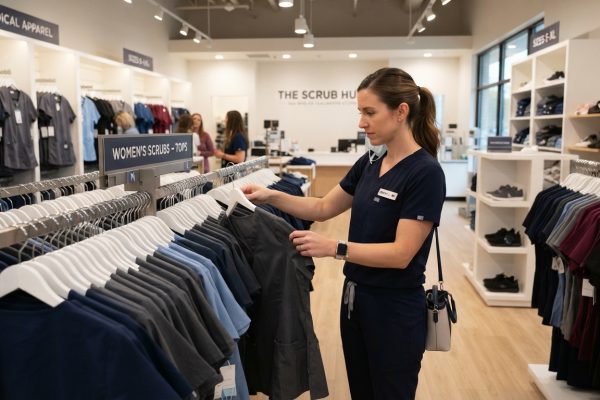

A scrub size chart helps healthcare workers choose medical scrubs with better fit, comfort, coverage, and movement before ordering online. Nurses, CNAs, medical assistants, dental workers, veterinary staff, healthcare students, and clinic teams should measure carefully, compare brand sizing, check inseam options, and review fabric stretch before buying several sets.
Because scrub sizing can vary by brand, collection, fabric, and style, shoppers should use a scrub size chart as a starting point rather than guessing based only on everyday clothing size. The best scrub fit should support real clinical movement, not just look acceptable while standing still.
Quick Answer
To use a scrub size chart correctly, healthcare workers should measure the chest or bust, waist, hips, inseam, and preferred top length, then compare those measurements to the brand’s chart before ordering. Scrub shoppers should also review fabric stretch, pant rise, leg length, top fit, return policy, and whether the collection runs classic, modern, slim, relaxed, petite, tall, or unisex.
Before buying scrubs online, check:
- Chest or bust measurement
- Natural waist measurement
- Hip measurement
- Inseam measurement
- Top length preference
- Pant rise preference
- Petite, regular, tall, or short length availability
- Men’s, women’s, or unisex sizing
- Fabric stretch and recovery
- Brand-specific size chart
- Fit notes from the product or collection
- Return or exchange policy before buying multiple sets
Why Scrub Sizing Matters
Scrubs are workwear. They need to support long shifts, repeated movement, pocket use, workplace dress codes, and frequent washing. A scrub set that is too tight can restrict movement. A set that is too loose can look sloppy, slide during work, or catch on surfaces.
Healthcare workers may need to:
- Reach for supplies
- Sit and chart
- Bend during care tasks
- Walk between rooms
- Carry items in pockets
- Layer with underscrubs or jackets
- Wear work shoes for long periods
- Maintain professional coverage
A good fit should support all of those needs. Scrubs should feel comfortable while standing, sitting, bending, walking, and reaching.
Start With Body Measurements, Not Guesswork
Everyday clothing sizes are not always reliable for scrubs. A worker may wear one size in regular clothes and need a different size in medical uniforms. Brand sizing can also vary across scrub collections.
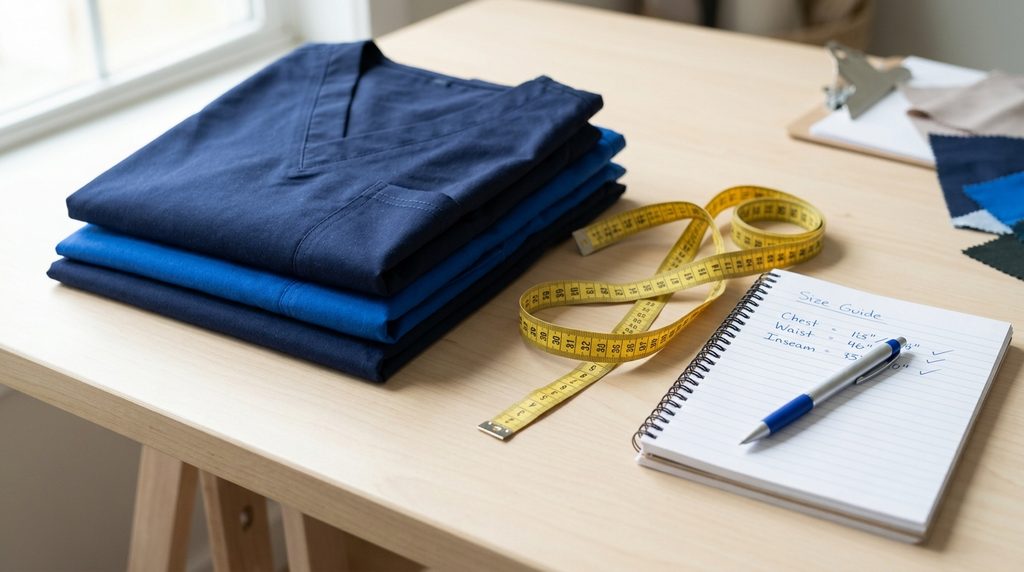
Before shopping, measure:
- Chest or bust
- Natural waist
- Full hip
- Inseam
- Shoulder width, if needed
- Preferred top length
- Preferred sleeve comfort
- Preferred pant rise
Use a soft measuring tape and measure over light clothing. Measurements should be close to the body without pulling the tape too tightly.
How to Measure Chest or Bust
Chest or bust measurement helps determine scrub top size. This is especially important for workers who have trouble with tops pulling across the chest, shoulders, or upper back.
To measure:
- Wrap the measuring tape around the fullest part of the chest or bust.
- Keep the tape level across the back.
- Keep arms relaxed.
- Do not pull the tape too tight.
- Compare the measurement to the scrub brand’s top size chart.
A scrub top should allow comfortable shoulder movement and coverage while bending. The top should not gap, pull, or restrict reaching.
How to Measure the Waist
Waist measurement helps determine scrub pant size and waistband comfort. The natural waist is usually the narrowest part of the torso, but scrub pants may sit lower or higher depending on rise.
To measure:
- Wrap the tape around the natural waist.
- Keep the tape level.
- Stand relaxed.
- Avoid holding the stomach in.
- Compare the measurement to the pant size chart.
Healthcare workers should also consider waistband style. Drawstring, elastic, knit, yoga-style, and zip-fly waistbands can all feel different, even in the same size.
How to Measure the Hips
Hip measurement is important for scrub pants because pants need enough room through the hips, seat, and upper thigh.
To measure:
- Wrap the tape around the fullest part of the hips.
- Keep feet together or naturally close.
- Keep the tape level.
- Avoid pulling the tape too tight.
- Compare the measurement to the pant size chart.
If hip measurement falls into a larger size than waist measurement, the larger size may provide better movement and coverage. Scrubs can often be adjusted at the waist, but pants that are too tight through the hips may restrict sitting, bending, or walking.
How to Measure Inseam
Inseam determines pant length. This is one of the most important measurements for scrub pants because pants that are too long may drag, while pants that are too short may look unprofessional or feel uncomfortable.
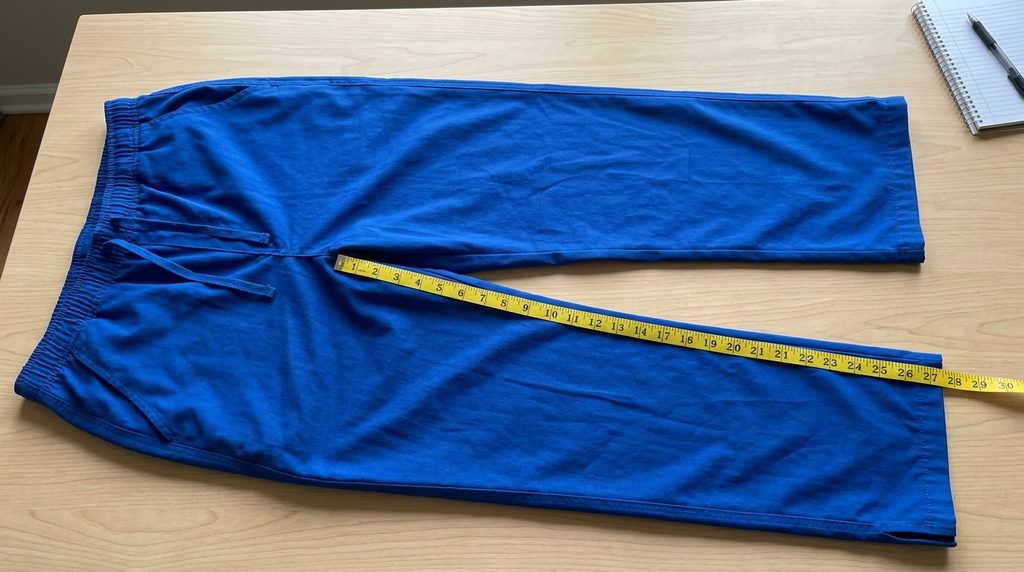
To measure:
- Use a pair of pants with a length that fits well.
- Measure from the crotch seam to the bottom hem.
- Compare that measurement to the scrub pant inseam.
- Consider the shoes normally worn at work.
- Check petite, regular, tall, or short-length options when available.
Pant length should be checked with work shoes. Sneakers, clogs, and supportive shoes can change how scrub pants fall at the ankle.
Understand Women’s, Men’s, and Unisex Scrub Sizing
Scrubs may use women’s sizing, men’s sizing, or unisex sizing. These categories do not fit the same way.
Women’s scrub sizing
Women’s scrub sizing usually considers bust, waist, hip, torso shape, pant rise, and leg style. Women’s styles may include petite, regular, and tall lengths, plus jogger, straight-leg, flare, tapered, or bootcut options.
Men’s scrub sizing
Men’s scrub sizing usually focuses on chest, waist, inseam, shoulder room, and pant rise. Men’s scrub pants may include short, regular, and tall lengths.
Unisex scrub sizing
Unisex scrubs often have a straighter, roomier fit. Some workers size down in unisex styles, while others prefer the relaxed fit. The exact choice depends on the brand, body shape, and preferred coverage.
Workers buying medical scrubs online should confirm whether the item is women’s, men’s, or unisex before choosing a size.
Compare Measurements to the Brand’s Size Chart
Once measurements are ready, compare them to the brand’s chart. The chart may include chest, waist, hip, inseam, and size ranges. If measurements fall between sizes, consider fit preference, fabric stretch, and garment style before deciding.
A size chart is most useful when shoppers check:
- The exact brand
- The exact collection
- The garment type
- The fit description
- The fabric stretch
- The inseam length
- The rise
- The return policy
Do not assume every scrub brand fits the same. A medium in one collection may not feel like a medium in another.
What to Do When Measurements Fall Between Sizes
Many healthcare workers fall between sizes. The best decision depends on the garment, fabric, and role.
Consider sizing up when:
- The fabric has limited stretch
- The top pulls across the shoulders
- The pants feel tight through the hips
- The role requires frequent bending
- The worker prefers relaxed coverage
- The item may shrink slightly after washing
- The uniform will be layered with underscrubs
Consider sizing down when:
- The style is oversized or unisex
- The fabric has strong stretch
- The waist feels loose
- The top looks too boxy
- The pants sag when pockets are filled
- The worker prefers a cleaner modern fit
When unsure, one test set is usually safer than ordering several sets in the same size.
Fabric Stretch Can Change the Fit
Fabric stretch affects how scrubs feel during movement. A non-stretch scrub may need more ease through the shoulders, hips, and thighs. A stretch scrub may allow a closer fit, but it should still provide coverage and recovery.
Stretch can help during:
- Reaching
- Sitting
- Bending
- Walking
- Charting
- Lifting light supplies
- Moving between patient rooms
- Wearing items in pockets
Stretch should recover after movement. Fabric that stretches but does not return to shape may look baggy by the end of a shift.
Top Fit Should Be Tested Through Movement
A scrub top should not be judged only while standing still. Healthcare workers should think about how the top will feel during real clinical tasks.
A good scrub top should allow:
- Shoulder movement
- Comfortable chest fit
- Coverage while bending
- Neckline security
- Sleeve comfort
- Pocket access
- Layering with jackets or underscrubs
- Professional appearance during movement
A top that pulls across the shoulders may feel uncomfortable during a full shift. A top that is too loose may look boxy or shift during work.
Pant Fit Should Be Checked Carefully
Scrub pants affect comfort throughout the entire day. A good size chart can help, but shoppers should also consider rise, waistband, leg shape, pocket placement, and inseam.
A good scrub pant should allow:
- Comfortable sitting
- Easy walking
- Bending without slipping
- Secure waistband fit
- Enough hip and thigh room
- Proper knee movement
- Pant length that works with shoes
- Pocket use without sagging
Pant fit should support the worker’s body and role. Nurses, dental workers, veterinary staff, medical assistants, providers, and students may all have different pant needs.
Pant Rise Changes Coverage and Comfort
Pant rise affects where the waistband sits and how much coverage the pants provide during movement.
Low-rise scrub pants
Low-rise scrub pants may feel comfortable for some workers, but they may create coverage concerns when bending or sitting.
Mid-rise scrub pants
Mid-rise pants often provide a balance of comfort, coverage, and flexibility. They work well for many healthcare workers.
High-rise scrub pants
High-rise pants may provide more coverage and waist support. They can work well with tuckable tops or workers who prefer a more secure fit.
The best rise depends on body type, movement needs, and scrub top style.
Inseam Options Matter for Professional Appearance
Pant length is one of the most common online sizing problems. A scrub pant may fit well at the waist but still feel wrong if the inseam does not match the wearer’s height and shoes.
Review available lengths such as:
- Petite
- Regular
- Tall
- Short
- Jogger
- Tapered
- Straight-leg
- Bootcut or flare
Workers should check inseam before ordering, especially if regular pants usually drag or feel too short. Shoppers comparing scrub stores in Utah may also benefit from in-person fit support when choosing between petite, regular, tall, or short-length pants.
Scrub Fit Should Match the Role
Different healthcare roles may need different scrub fits. A worker who bends, lifts, and moves frequently may prefer a different fit than someone who spends more time charting or consulting.
Nurses and CNAs
Nurses and CNAs often need stretch, coverage, secure waistbands, and practical pockets.
Helpful sizing priorities include:
- Shoulder mobility
- Waistband security
- Pant length
- Pocket placement
- Fabric recovery
- Coverage while bending
Medical assistants
Medical assistants may move between clinical and administrative tasks.
Helpful sizing priorities include:
- Professional appearance
- Comfortable movement
- Practical storage
- Easy layering
- Team color consistency
Dental professionals
Dental workers often sit, lean, and reach in compact treatment areas.
Helpful sizing priorities include:
- Seated waistband comfort
- Shoulder flexibility
- Smooth fabric
- Pocket access while seated
- Clean team fit
Veterinary staff
Veterinary workers may bend, lift, clean, and move quickly.
Helpful sizing priorities include:
- Secure pockets
- Stretch recovery
- Durable fabric
- Proper pant length
- Comfortable coverage
Healthcare students
Students need scrubs that meet school rules while supporting labs and clinical rotations.
Helpful sizing priorities include:
- Required color
- Correct size
- Practical pockets
- Easy washing
- Lab coat compatibility
- Budget-conscious fit
Group Orders Need Extra Sizing Planning
Group scrub orders require more planning than individual purchases. A clinic, dental office, veterinary team, med spa, or school program may need consistent colors while supporting different sizes, body types, and fit preferences.

Before placing a group order, teams should collect:
- Staff names
- Top sizes
- Pant sizes
- Inseam needs
- Men’s, women’s, or unisex preferences
- Jacket sizes
- Lab coat sizes, if needed
- Embroidery details
- Role-specific pocket needs
- Return or exchange expectations
A sizing form can reduce errors. Teams should also consider whether staff should try on samples before ordering embroidered or customized uniforms.
Do Not Ignore Brand and Collection Differences
Even within one brand, different collections may fit differently. A performance-style collection may feel more athletic. A classic collection may feel roomier. A fashion-forward line may feel slimmer. A utility collection may have more pockets and a more structured fit.
Before ordering, check:
- Brand size chart
- Collection fit notes
- Fabric composition
- Stretch level
- Style cut
- Pant rise
- Inseam options
- Product reviews, if available
- Return policy
The best fit decision should combine measurements with garment details.
How Scrubs Should Fit After Washing
Scrubs should remain practical after repeated washing. A set that fits perfectly before laundering may feel different if fabric shrinks, relaxes, fades, or loses shape.
Before buying several sets, workers should check:
- Care instructions
- Fabric content
- Drying instructions
- Shrinkage notes, if available
- Whether the fabric wrinkles easily
- Whether the color may fade
- Whether the waistband keeps shape
- Whether stretch recovers after washing
The CDC explains that Standard Precautions are used for all patient care and include infection-prevention practices across healthcare settings. Scrub laundering should follow employer policy and garment care labels.
Why Local Try-On Still Helps Online Shoppers
Online shopping is convenient, but local try-on support can help workers confirm sizes before buying multiple pieces. Trying on scrubs in person can be especially useful when switching brands, choosing new pant lengths, preparing for school, or placing team orders.
Healthcare workers can review a local medical scrub store profile before planning an in-person fit check.
Local try-on support can help with:
- Comparing brands
- Checking pant length
- Confirming top coverage
- Testing shoulder movement
- Choosing men’s or women’s sizing
- Comparing unisex options
- Reviewing colors in person
- Avoiding large return orders
A worker may still buy online after trying on, but the size decision is usually stronger.
Fit Problems That Usually Mean the Size Is Wrong
Scrubs should not create constant distractions during work. Some fit problems signal that a different size, length, rise, or style may be needed.
Common signs of poor fit include:
- Top pulls across the shoulders
- Neckline gaps while bending
- Sleeves feel tight
- Pants slide down
- Waistband digs or rolls
- Pants pull through the thighs
- Hem drags under shoes
- Pants ride up too high while sitting
- Pockets sag when filled
- Fabric feels restrictive
- Scrubs need constant adjusting
A better size or different style can often solve these issues.
Size Charts and Return Policies Work Together
A size chart helps reduce sizing mistakes, but return and exchange policies still matter. Scrub shoppers should understand the policy before buying several sets, especially when ordering new brands, embroidered items, or group uniforms.
Before buying, check:
- Return window
- Exchange process
- Condition requirements
- Tags and packaging rules
- Whether washed items can be returned
- Whether embroidered items are final sale
- Shipping or restocking costs
- Store credit rules, if applicable
A clear return plan makes online scrub shopping less risky.
How Many Scrub Sets Should Be Tested First?
When trying a new brand or collection, buying one top and one pant first is often safer than buying a full workweek of uniforms. Once the size, fabric, rise, and length are confirmed, additional sets can be ordered with more confidence.
Testing one set helps confirm:
- Size accuracy
- Fabric comfort
- Pocket usefulness
- Laundering behavior
- Pant length
- Waistband comfort
- Top coverage
- Workplace color match
- Movement during real tasks
This is especially important for students, teams, and workers switching from one brand to another.
Online Scrub Sizing Checklist
Before adding scrubs to the cart, healthcare workers should review:
- Brand size chart
- Chest or bust measurement
- Waist measurement
- Hip measurement
- Inseam measurement
- Fit type
- Fabric stretch
- Pant rise
- Pant length options
- Top length
- Pocket layout
- Workplace-approved color
- Care instructions
- Return policy
- Whether customization affects returns
This checklist can reduce sizing mistakes and help shoppers choose scrubs that work during real clinical shifts.
Common Mistakes When Using a Scrub Size Chart
Using regular clothing size only
Everyday clothing size may not match scrub sizing. Measurements are more reliable.
Ignoring inseam
Pant length can affect safety, comfort, and appearance. Inseam should be checked before ordering.
Skipping fabric stretch details
Stretch can change how close or relaxed the fit feels during movement.
Buying several sets before testing one
Trying one set first can prevent repeated sizing mistakes.
Forgetting workplace rules
Colors, jackets, joggers, underscrubs, embroidery, and lab coats may be controlled by employer policy.
Ignoring return policy
Sizing mistakes are easier to manage when return and exchange rules are clear.
Final Checklist Before Buying Medical Scrubs Online
Before choosing scrubs online, healthcare workers should confirm:
- Correct top size
- Correct pant size
- Chest or bust measurement
- Waist measurement
- Hip measurement
- Inseam length
- Pant rise
- Top coverage
- Fabric stretch
- Breathability
- Pocket layout
- Workplace-approved color
- Care instructions
- Return or exchange policy
- Team uniform needs, if applicable
A scrub size chart is most helpful when used with real measurements, garment details, and workday needs. The right scrubs should fit the body, support movement, follow workplace rules, and remain practical after repeated wear.
FAQs
How do healthcare workers use a scrub size chart?
Healthcare workers should measure the chest or bust, waist, hips, and inseam, then compare those numbers to the brand’s size chart. They should also check fabric stretch, pant rise, top length, and whether the item uses women’s, men’s, or unisex sizing.
Should scrubs fit loose or fitted?
Scrubs should fit comfortably without being too tight or too loose. They should allow reaching, bending, sitting, walking, and pocket use while maintaining coverage and a professional appearance. The best fit depends on role, body type, fabric stretch, and workplace rules.
What if scrub measurements fall between sizes?
When measurements fall between sizes, shoppers should consider fabric stretch, preferred fit, role, and garment style. Sizing up may help with coverage and movement, while sizing down may work for oversized or unisex scrubs. Testing one set first is usually safest.
Why is inseam important when buying scrub pants?
Inseam determines pant length. Pants that are too long may drag or bunch around shoes, while pants that are too short may look cropped or ride up while sitting. Healthcare workers should compare inseam options with normal work shoes.
Is it better to try on scrubs before ordering online?
Trying on scrubs can help confirm size, pant length, shoulder movement, waistband comfort, and fabric feel before buying multiple sets. This is especially helpful when switching brands, choosing petite or tall lengths, or ordering group uniforms.