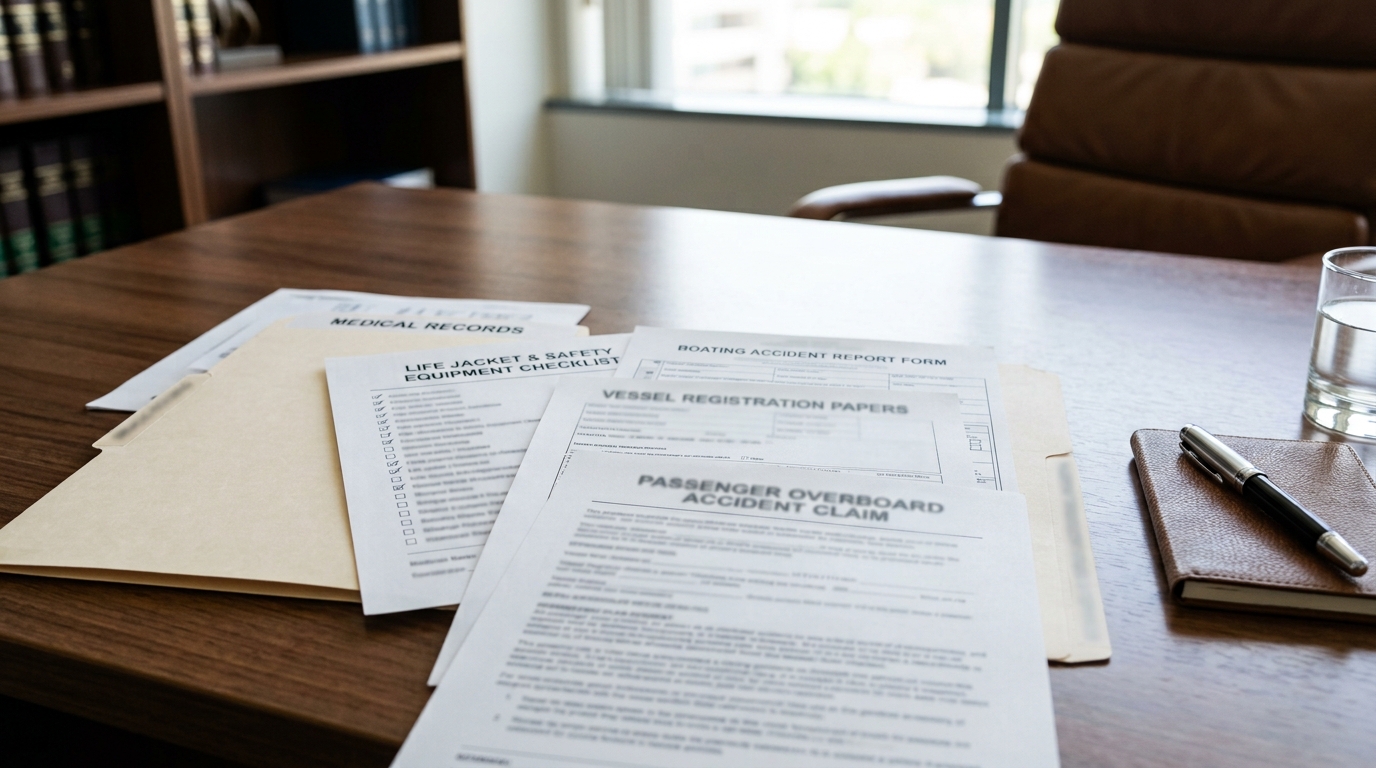
Passenger overboard accident claims in New York may involve recreational boats, rental vessels, charter boats, personal watercraft, unsafe wake, sudden turns, poor supervision, missing life jackets, alcohol use, defective equipment, bad weather, or delayed rescue. These claims require careful evidence review because the injury may involve both the fall overboard and what happened afterward. People reviewing boating injury options may use a boating accident lawyer Long Island resource to understand how liability, evidence, insurance, and damages are generally evaluated.
Quick Answer
A passenger overboard claim usually depends on why the person went overboard, who operated the vessel, who owned it, whether speed or wake contributed, whether passengers were warned or seated safely, whether required safety equipment was available, whether the operator responded reasonably, and whether the fall caused injury, drowning risk, or delayed rescue harm. Important evidence may include accident reports, witness statements, passenger accounts, vessel registration, owner information, GPS data, photos, videos, life jacket records, weather conditions, medical records, and insurance documents.
Key Takeaways
- Passenger overboard claims may involve operator negligence, vessel owner liability, rental company conduct, charter crew decisions, safety equipment issues, defective vessel parts, or public entity concerns.
- The U.S. Coast Guard’s 2024 recreational boating materials identify falls overboard, ejection from vessels, and drowning among important boating safety concerns, and its 2024 release states that drowning accounted for three-quarters of boating deaths, with 87% of drowning victims not wearing life jackets.
- New York Navigation Law § 45 requires vessel operators to navigate carefully and prudently and not operate at a speed greater than reasonable and prudent under existing conditions and hazards.
- New York State Parks states that motorized and non-motorized vessels must have one life jacket for each person aboard, and that children under 12 must wear a PFD in many covered boating situations unless in an enclosed cabin.
- New York Navigation Law § 47-B may require a written boating accident report within five days after qualifying accidents involving injury, death, disappearance under water, or property damage above the statutory threshold.
- Public docks, municipal marinas, public launches, state parks, or government-controlled waterfront areas may involve shorter notice rules.
Why Passenger Overboard Claims Are Different
Passenger overboard claims are different because the injury may not come from one single moment. A passenger may go overboard because of unsafe speed, wake impact, sudden turning, poor seating, slippery surfaces, lack of warning, bad weather, defective rails, or careless operation. The harm may then become worse because of cold water, missing life jackets, delayed rescue, propeller danger, exhaustion, panic, or poor emergency response.
A passenger overboard claim may involve:
- A recreational boat
- A rented boat or personal watercraft
- A charter boat or tour boat
- A fishing boat
- A pontoon boat
- A passenger vessel
- A kayak, canoe, or paddleboard
- A docked or moored vessel
- A boat operating in rough water
- A boat near a marina, public launch, or public dock
The claim usually needs to explain both why the passenger entered the water and whether reasonable safety steps could have prevented or reduced the injury.
Common Passenger Overboard Scenarios
Passenger overboard incidents can happen during normal travel, docking, anchoring, fishing, sightseeing, towing activities, rough water, or emergency situations.
Common scenarios include:
- Passenger thrown overboard after sudden acceleration
- Passenger falls after the boat crosses wake too fast
- Passenger ejected during a sharp turn
- Passenger slips on a wet deck
- Passenger falls while boarding or exiting
- Passenger falls from a fishing boat
- Child passenger goes overboard because of poor supervision
- Passenger falls during unsafe docking
- Passenger falls after a railing, ladder, or seat fails
- Passenger falls from a rental boat
- Passenger falls from a charter or tour boat
- Passenger enters the water after a collision
- Passenger falls overboard during bad weather
- Passenger falls near a running propeller
The exact scenario affects liability, insurance, evidence, and deadlines.
Operator Negligence
The vessel operator is often one of the first parties reviewed after a passenger goes overboard. Operator conduct may determine whether the fall was preventable and whether emergency response was reasonable.
Operator negligence may involve:
- Excessive speed
- Sudden turns
- Unsafe acceleration
- Crossing wake too quickly
- Poor lookout
- Distracted operation
- Boating while impaired
- Failure to warn passengers
- Allowing unsafe seating
- Operating too close to docks or other vessels
- Ignoring weather or water conditions
- Delayed rescue response
- Failure to stop the engine when appropriate
New York Navigation Law § 45 requires careful and prudent vessel operation and prohibits speeds greater than reasonable and prudent under existing conditions and hazards.
Unsafe Speed, Wake, and Sudden Movement
Speed and wake are common factors in passenger overboard claims. A boat may hit another vessel’s wake, create its own unstable movement, or cross rough water in a way that throws passengers off balance.
Speed and wake evidence may include:
- GPS data
- Passenger statements
- Witness accounts
- Photos or videos
- Waterway conditions
- Weather records
- No-wake signs
- Accident report notes
- Marina footage
- Vessel damage
- Operator admissions
A related boat accident attorney guide may help readers understand why operator conduct, vessel control, ownership, and evidence often need to be reviewed together.
Unsafe Seating and Passenger Placement
Passenger placement can affect whether an overboard incident was preventable. Operators may need to consider passenger age, experience, weight distribution, seating, movement, rails, speed, and weather conditions.
Unsafe passenger placement may involve:
- Sitting on the bow while underway
- Standing during acceleration
- Sitting on a gunwale or edge
- Moving around during sharp turns
- Riding in an overloaded vessel
- Being placed near an open stern
- Sitting where no handhold is available
- Children seated without supervision
- Passengers not warned before speed changes
A passenger’s conduct may be reviewed, but the operator’s instructions, warnings, speed, and supervision can also matter.
Life Jackets and Safety Equipment
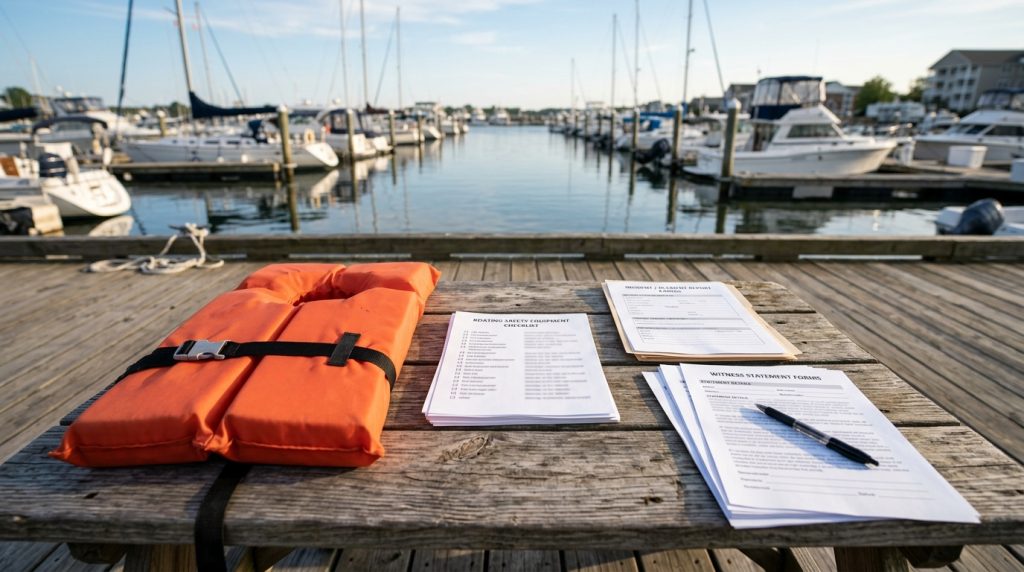
Life jacket evidence can be central in passenger overboard claims. New York State Parks states that boaters must have one life jacket for each person aboard and that life jackets must be U.S. Coast Guard-approved, accessible, in good condition, and properly sized.
Safety equipment issues may include:
- Not enough life jackets aboard
- Wrong size life jackets
- Damaged flotation devices
- Life jackets stored out of reach
- Passengers not told where life jackets were located
- Missing throwable flotation device
- Missing sound-producing device
- Defective reboarding ladder
- Missing emergency communication device
- Faulty engine cut-off switch
A missing or defective life jacket may not cause the fall, but it can affect drowning risk, rescue timing, injury severity, and claim evaluation.
Children and Passenger Overboard Claims
Child passenger overboard claims require special review because children rely on adults for safe seating, life jacket fit, supervision, and warnings. A child may not understand wake, boat movement, propeller risk, cold water, or unsafe seating.
Child-related issues may include:
- Child not wearing a required life jacket
- Improperly fitted child life jacket
- Poor supervision
- Unsafe seating
- Sudden turns or acceleration
- Lack of age-appropriate warnings
- Rental or charter company issues
- Camp or guided activity records
- Delayed rescue response
- Medical documentation and long-term effects
New York State Parks states that a PFD must be worn by anyone under 12 years old in many covered boating situations unless the child is in an enclosed cabin.
Rental Boat Passenger Overboard Claims
Rental boat cases may involve the renter, operator, rental company, vessel owner, marina, or another boater. A rental company is not automatically responsible for every overboard incident, but its instructions, equipment, maintenance, and records may matter.
Rental-related issues may include:
- Poor safety instruction
- Failure to explain safe seating
- Failure to explain wake or no-wake rules
- Missing or damaged life jackets
- Defective ladder or rail
- Overloaded rental vessel
- Poor weather warnings
- Renting to an unqualified operator
- Failure to preserve rental records
- Defective personal watercraft or boat controls
Important rental evidence may include the rental agreement, waiver, safety checklist, instruction records, GPS tracking, vessel inspection forms, maintenance logs, employee statements, incident reports, and insurance documents.
Charter Boat and Tour Boat Passenger Claims
Charter boats, tour boats, dinner boats, fishing charters, water taxis, and guided boating activities may involve paying passengers who rely on the operator and crew for safe operation, boarding, warnings, safety equipment, and emergency response.
Charter-related evidence may include:
- Passenger manifest
- Tickets or booking records
- Operator license information
- Vessel inspection records
- Crew assignments
- Safety briefing records
- Maintenance logs
- Incident reports
- Emergency response records
- Weather and route records
- Insurance policies
A charter passenger may have little control over speed, route, docking, weather decisions, or rescue procedures. That can make operator and crew records especially important.
Personal Watercraft Passenger Ejection
A passenger on a personal watercraft may be thrown into the water after sudden acceleration, sharp turns, wake-jumping, collision, or operator inexperience. These claims may involve operator conduct, rental instruction, life jacket use, and engine cut-off lanyard issues.
Personal watercraft evidence may include:
- Operator age
- Safe boating certificate records
- Rental agreement
- Safety instruction forms
- Life jacket records
- Lanyard evidence
- GPS or tracking data
- Photos of the craft
- Witness statements
- Accident report
- Medical records
- Insurance letters
New York State Parks explains that Brianna’s Law requires motorized vessel operators, including personal watercraft operators, to complete a state-approved safe boating course.
Defective Rails, Ladders, Seats, and Boat Parts
Some passenger overboard incidents involve equipment failure. A seat may detach, a railing may loosen, a ladder may break, a gate may open, or a platform may fail.
Defective equipment issues may include:
- Broken railing
- Loose seat
- Failed boarding ladder
- Unsafe swim platform
- Defective gate
- Defective handhold
- Slippery deck surface
- Poor maintenance
- Improper repair
- Product defect
- Missing warnings
If equipment failure is suspected, the vessel and failed part should be preserved when possible before repair, replacement, or disposal.
Alcohol and Impaired Operation
Alcohol or drug impairment can contribute to passenger overboard incidents by affecting judgment, reaction time, balance, lookout, speed control, and emergency response. New York Navigation Law § 49-A addresses vessel operation while under the influence of alcohol or drugs.
Alcohol-related evidence may include:
- Marine patrol reports
- Police reports
- Chemical test results
- Passenger statements
- Witness accounts
- Photos or videos
- Marina or restaurant receipts
- Operator admissions
- Emergency responder observations
Alcohol evidence may help explain unsafe operation, sudden movements, poor warnings, delayed rescue, or failure to follow basic boating safety rules.
Delayed Rescue and Emergency Response
The rescue response can be just as important as the fall itself. A person in the water may face drowning risk, hypothermia, impact with the vessel, propeller danger, panic, fatigue, or inability to reboard.
Emergency response questions may include:
- Did the operator stop quickly?
- Was the engine placed in neutral or turned off when appropriate?
- Was a throwable flotation device used?
- Were other passengers assigned to keep visual contact?
- Was emergency help called promptly?
- Was the person recovered safely?
- Was the reboarding ladder usable?
- Did crew members follow emergency procedures?
- Were medical needs addressed immediately after rescue?
Delayed response may affect both injury severity and liability analysis.
Propeller Danger After a Passenger Falls Overboard
Propeller danger is a major concern after a passenger enters the water. A passenger may be struck during backing, circling, docking, or rescue attempts. Propeller claims may involve operator lookout, engine control, rescue procedures, passenger warnings, and whether the vessel had functioning safety equipment.
Propeller-related evidence may include:
- Operator statements
- Passenger accounts
- Engine status
- Vessel position
- Photos and videos
- Accident report
- Medical records
- Expert inspection
- Safety instruction records
- Witness statements
A propeller injury claim may involve severe wounds, fractures, scarring, infection, disability, or wrongful death.
Bad Weather, Cold Water, and Hypothermia
Weather and water conditions can affect both the cause of an overboard incident and the severity of harm. Wind, rain, fog, rough water, wake, current, cold water, and low visibility may all matter.
Weather-related questions may include:
- Was the forecast checked before departure?
- Did the operator continue in unsafe conditions?
- Was the boat moving too fast for rough water?
- Were passengers warned to remain seated?
- Was visibility poor?
- Did cold water affect rescue urgency?
- Was proper safety equipment available?
- Did weather make reboarding difficult?
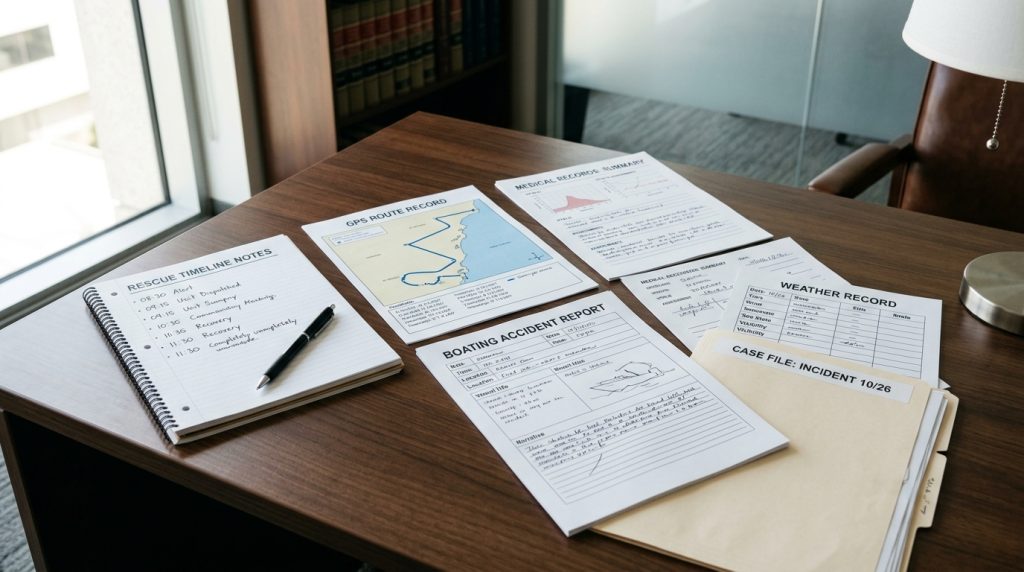
Weather evidence may include marine forecasts, radar screenshots, photos, videos, GPS data, witness statements, passenger accounts, and accident report notes.
Accident Reporting After a Passenger Goes Overboard
A passenger overboard incident may need to be reported if it meets New York reporting rules. New York Navigation Law § 47-B requires a written report within five days after certain vessel accidents involving death, injury, disappearance under water, or property damage to any one person above the statutory threshold.
A boating accident report may document:
- Date and time
- Waterway or marina location
- Vessel operator
- Vessel owner
- Vessel registration
- Passenger information
- Injury details
- Disappearance or rescue details
- Property damage
- Weather and water conditions
- Witnesses
- Emergency response
- Law enforcement involvement
The report is not the complete claim, but it can create an important official record before memories fade and evidence changes.
Evidence That Can Strengthen a Passenger Overboard Claim
Passenger overboard claims depend heavily on early evidence because conditions can change quickly. Water conditions may calm, vessels may be repaired, footage may be overwritten, and witnesses may leave the area.
Helpful evidence may include:
- Boating accident report
- Marine patrol or police report
- Photos and videos
- Vessel registration records
- Operator information
- Vessel owner information
- Passenger statements
- Witness names and contact details
- GPS or chartplotter data
- Phone location data
- Weather and water condition records
- Life jacket evidence
- Rental agreements
- Charter records
- Maintenance records
- Defective equipment evidence
- Emergency response records
- Medical records
- Insurance documents
For broader documentation planning, readers may review how evidence for personal injury claims can help connect accident facts, injuries, responsible parties, and damages.

Medical Records and Damages
Medical records are central in passenger overboard claims because injuries may involve impact trauma, drowning risk, near-drowning complications, hypothermia, propeller injuries, fractures, or psychological trauma.
Common injuries may include:
- Concussions
- Traumatic brain injuries
- Neck injuries
- Back injuries
- Shoulder injuries
- Knee injuries
- Fractures
- Lacerations
- Propeller injuries
- Drowning-related injuries
- Near-drowning complications
- Hypothermia
- Internal injuries
- Psychological trauma
- Scarring or disfigurement
- Wrongful death in severe cases
Medical documentation may include emergency records, hospital notes, imaging reports, specialist evaluations, surgery records, wound care records, therapy notes, prescriptions, work restrictions, bills, and future care recommendations.
Insurance Coverage in Passenger Overboard Claims
Insurance coverage may depend on who operated the vessel, who owned it, whether it was rented, whether the trip was commercial, where the fall happened, and whether defective equipment or public property contributed.
Potential insurance sources may include:
- Boat insurance
- Vessel owner policy
- Homeowner’s insurance
- Umbrella coverage
- Rental company insurance
- Charter or commercial vessel coverage
- Marina liability insurance
- Product liability coverage
- Maintenance contractor coverage
- Public entity coverage in limited cases
Insurance companies may dispute operator permission, intoxication, passenger conduct, life jacket use, vessel speed, comparative fault, policy exclusions, injury severity, and whether the fall was caused by negligence.
Vessel Owner Liability
The person operating the vessel may not be the owner. A boat may be borrowed, rented, leased, used by a family member, or controlled by a business. New York Navigation Law § 48 addresses vessel owner liability when negligent use or operation occurs with the owner’s express or implied permission.
Owner-related questions may include:
- Who owned the vessel?
- Who operated it?
- Did the operator have permission?
- Was permission express or implied?
- Was the vessel properly maintained?
- Were passengers expected aboard?
- Were life jackets and safety equipment available?
- Was the boat privately owned, rented, or commercial?
- What insurance coverage applied?
Ownership and permission evidence can affect both liability and insurance coverage.
Comparative Fault and Passenger Conduct
Defendants and insurers may argue that the passenger contributed to the incident. They may claim the passenger stood up, ignored instructions, failed to wear a life jacket, moved around during operation, drank alcohol, sat in an unsafe area, or failed to hold on.
These arguments do not automatically defeat a claim. Important questions include:
- Were passengers clearly warned?
- Was the boat moving too fast?
- Did sudden wake or turning cause the fall?
- Was unsafe seating allowed or encouraged?
- Were enough safe seats available?
- Was the passenger a child or inexperienced boater?
- Was a life jacket provided and properly fitted?
- Did a defective seat, railing, ladder, or deck contribute?
- Did the operator respond promptly?
Fault should be evaluated based on the full evidence, not assumptions.
Public Entity Notice Issues
Some passenger overboard claims involve public docks, municipal marinas, public launches, state parks, public vessels, public authorities, or government-controlled waterfront facilities. These claims may involve shorter notice requirements.
New York General Municipal Law § 50-E generally requires a notice of claim within 90 days when notice is required for certain tort claims against public corporations. The notice must include details such as the nature of the claim, time, place, manner in which it arose, and claimed injuries or damages as far as practicable.
Public entity evidence may include:
- Exact location
- Public agency name
- Facility signage
- Incident reports
- Dock or launch records
- Public vessel records
- Supervision records
- Prior complaints
- Photos and videos
- Witness statements
- Surveillance footage
The exact location should be documented early because the responsible public agency may not be obvious.
Deadlines for Passenger Overboard Claims
Deadlines depend on the claim type and responsible party. The New York Courts statute of limitations timetable lists three years for many negligence-based personal injury claims, two years for wrongful death claims, and three years for product liability matters.
Practical deadlines may arrive sooner. Accident reporting, insurance notice, public entity notice rules, vessel repair, life jacket preservation, GPS data, surveillance footage, rental records, charter records, and witness identification can create urgency before the lawsuit deadline.
Common Mistakes After a Passenger Overboard Incident
Some mistakes can make a passenger overboard claim harder to prove.
Common mistakes include:
- Not getting medical care promptly
- Not reporting a qualifying boating accident
- Not identifying the operator and vessel owner
- Not collecting passenger and witness information
- Not photographing the vessel and safety equipment
- Not preserving life jacket evidence
- Not saving GPS, phone, or chartplotter data
- Not documenting weather, wake, and water conditions
- Not saving rental or charter documents
- Allowing vessel or equipment repair before inspection
- Not requesting marina or dock surveillance quickly
- Giving broad insurance statements before facts are clear
- Accepting a quick settlement before injuries are fully known
- Missing public entity notice deadlines
A strong claim usually depends on prompt medical care, accident reporting, preserved evidence, witness statements, vessel records, and organized documentation.
When Legal Guidance May Be Useful
Legal guidance may be useful when a passenger overboard incident causes serious injury, drowning risk, near-drowning complications, propeller injury, hypothermia, disputed fault, missing life jackets, rental boat issues, charter vessel issues, defective equipment, or unclear insurance coverage.
A passenger overboard claim may require review of operator conduct, vessel owner liability, safety instructions, life jacket evidence, rescue response, GPS data, accident reports, medical records, insurance policies, public entity rules, and deadlines.
People researching local support may review a Farmingdale legal office location when looking for Long Island boating accident claim information. Publicly available personal injury case results may provide general context, although every claim depends on its own facts, evidence, injuries, insurance coverage, and applicable law.
FAQs About Passenger Overboard Claims
Can a passenger file a claim after falling overboard?
Yes. A passenger may have a claim if unsafe operation, excessive speed, sudden turning, unsafe wake, poor supervision, defective equipment, missing safety gear, rental company conduct, charter crew errors, or delayed rescue caused or worsened the injury.
What evidence matters after a passenger goes overboard?
Important evidence may include accident reports, witness statements, passenger accounts, photos, videos, GPS data, vessel registration, owner information, life jacket evidence, weather records, rescue records, medical records, and insurance letters.
Can a boat operator be liable for a passenger falling overboard?
Yes. A boat operator may be reviewed if unreasonable speed, unsafe turns, poor lookout, failure to warn, unsafe seating, alcohol use, or delayed emergency response caused or contributed to the passenger going overboard.
Are life jackets important in passenger overboard claims?
Yes. Life jacket availability, fit, accessibility, condition, and use can affect injury severity, drowning risk, rescue timing, and liability analysis. Child passengers may also be subject to specific PFD-wearing requirements in many covered situations.
How long does someone have to file a passenger overboard claim in New York?
The deadline depends on the claim type and responsible party. Many New York negligence and product liability claims have a three-year limitations period, but wrongful death, public entity, insurance notice, accident reporting, and evidence preservation issues may involve shorter timelines.
Final Thoughts
Passenger overboard accident claims in New York require careful investigation because the incident may involve unsafe speed, sudden turns, wake, poor warnings, defective rails, missing life jackets, delayed rescue, rental records, charter crew conduct, or public property. The strongest claims usually depend on prompt medical care, accident reports, passenger and witness statements, vessel information, safety equipment records, GPS data, medical documentation, insurance review, and a clear timeline showing why the passenger went overboard and how the injury occurred.