
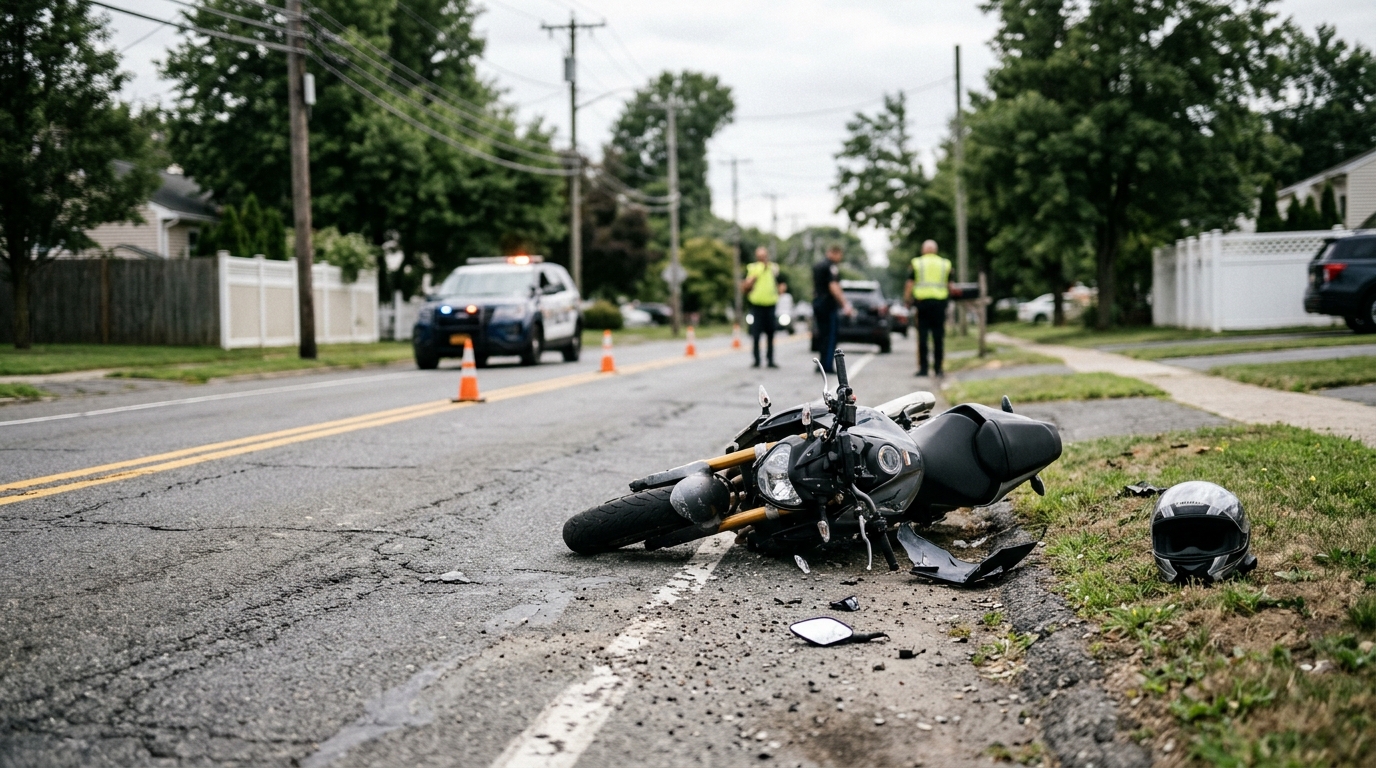
Motorcycle accident claims in New York involve unique legal considerations, including mandatory helmet requirements, potential bias against motorcyclists, medical evidence, and insurance coverage rules. Injured riders may pursue compensation when another party’s negligence contributes to a crash, but establishing liability and documenting injuries are essential to building a strong claim.
Understanding how helmet use, comparative negligence, and medical documentation affect these claims can help injured motorcyclists protect their legal rights and evaluate their recovery options.
Quick Answer: What Affects Motorcycle Accident Claims in New York?
Motorcycle accident claims in New York are primarily evaluated based on who caused the collision, the severity of the resulting injuries, and the evidence supporting financial and non-economic losses.
Important considerations include:
- Helmet Compliance: New York requires motorcycle operators and passengers to wear approved protective helmets.
- Comparative Negligence: Injured riders may recover compensation even when they share responsibility for an accident, subject to proportional reductions.
- Rider Bias: Assumptions about speeding or reckless riding should be evaluated against objective evidence.
- Medical Documentation: Treatment records help establish injury severity, accident-related causation, and future medical needs.
- Insurance Coverage: Motorcycle operators and passengers are generally excluded from New York’s no-fault insurance benefits.
- Legal Deadlines: Most negligence-based personal injury lawsuits must be filed within three years, although exceptions and shorter deadlines may apply.
Because motorcycle accidents frequently involve complex injuries and disputed fault, preserving evidence early can substantially influence the outcome.
How Are Motorcycle Accident Claims Different From Car Accident Claims?
Motorcycle accident claims differ from conventional automobile claims in several important ways.
Motorcyclists have less physical protection than occupants of enclosed vehicles. Even a collision at a relatively moderate speed can produce serious injuries because the rider may be thrown from the motorcycle or make direct contact with the roadway.
The legal and insurance frameworks also create important differences.
Motorcycle Riders Face Distinct Injury Risks
Motorcycle crashes can result in injuries involving multiple areas of the body.
Common motorcycle accident injuries include:
- Traumatic brain injuries and concussions.
- Spinal cord injuries and vertebral fractures.
- Broken bones and complex orthopedic injuries.
- Road rash and soft-tissue damage.
- Internal organ injuries.
- Nerve damage and chronic pain.
- Permanent disability and reduced mobility.
The New York State Department of Health emphasizes protective equipment, including properly fitted helmets, eye protection, durable clothing, and appropriate footwear, to reduce motorcycle-related injury risks.
Protective equipment can reduce certain injuries, but it cannot eliminate the danger posed by negligent drivers or hazardous road conditions.
New York’s No-Fault Insurance Rules Are Different for Motorcycles
New York generally uses a no-fault insurance system for qualifying motor vehicle accidents. However, operators and passengers of motorcycles are excluded from no-fault Personal Injury Protection benefits.
According to the New York Department of Financial Services, motorcycle operators and passengers involved in accidents are not eligible for no-fault benefits solely through their status as motorcycle occupants.
Department of Financial Services
This distinction can affect how medical bills and lost income are addressed following a crash.
An injured rider may need to consider available health insurance, applicable motorcycle medical payments coverage, and potential liability claims against responsible parties.
Additionally, injured motorcyclists generally are not required to satisfy the automobile no-fault serious injury threshold before pursuing a negligence-based claim for non-economic damages.
However, they must still establish liability, causation, and legally recoverable damages.
What Are New York’s Motorcycle Helmet Laws?
New York requires both motorcycle operators and passengers to wear legally compliant protective helmets.

Under New York Vehicle and Traffic Law Section 381, a person may not operate or ride on a motorcycle without a protective helmet meeting the applicable federal safety standards.
NYSenate.gov
The requirement applies regardless of the rider’s age or experience.
What Helmet Standards Apply?
Motorcycle helmets must satisfy applicable federal safety requirements, including Federal Motor Vehicle Safety Standard No. 218.
The New York Department of Motor Vehicles also requires approved eye protection for motorcycle operators, even when the motorcycle has a windshield.
The New York DMV Motorcycle Manual provides guidance on helmet fit, eye protection, and motorcycle safety equipment.
Wearing an approved helmet is important for safety and legal compliance. Nevertheless, helmet compliance alone does not determine who caused a collision.
Can a Rider File a Claim Without Wearing a Helmet?
Yes. Failure to wear a helmet does not automatically prevent an injured motorcyclist from pursuing compensation when another party caused an accident.
However, helmet nonuse may become relevant when evaluating whether certain injuries could have been prevented or reduced.
For example, if a motorcyclist suffers a head injury while not wearing a helmet, the defendant may argue that the missing protective equipment increased the severity of the injury.
That argument requires appropriate factual and medical support.
Importantly, the issue of whether a helmet would have reduced an injury is distinct from the question of who caused the original collision.
Additional information about motorcycle accident helmet use can help explain the relationship between protective equipment, injury causation, and compensation disputes.
Does Helmet Nonuse Automatically Reduce Compensation?
No. A reduction is not automatic.
New York courts have recognized distinctions between conduct contributing to an accident and conduct potentially affecting the extent of resulting injuries.
In certain circumstances, evidence concerning protective equipment may be relevant to damages when the defense can establish an appropriate connection between nonuse and preventable harm.
A defendant cannot simply assume that every injury would have been avoided through helmet use.
Medical records, injury patterns, accident reconstruction, and qualified expert opinions may become necessary to evaluate the argument.
How Does Bias Against Motorcyclists Affect Injury Claims?
Motorcycle accident investigations sometimes involve assumptions about rider behavior.
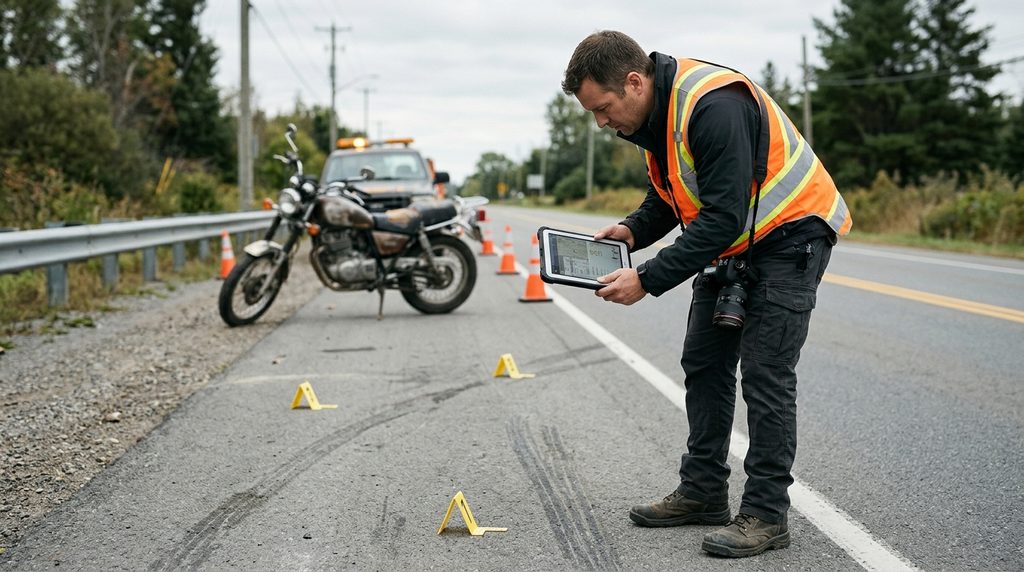
A motorcyclist may be portrayed as speeding, weaving through traffic, or taking unnecessary risks even when the available evidence does not support those allegations.
Such assumptions should not replace a proper investigation.
Common Misconceptions About Motorcyclists
Several recurring perceptions may influence how motorcycle accidents are discussed:
- Motorcyclists are always traveling too fast.
- Riders regularly ignore traffic laws.
- Motorcyclists assume responsibility for their injuries by choosing to ride.
- Motorcycle crashes are usually caused by rider inexperience.
- Severe injuries automatically indicate reckless riding.
None of these assumptions establishes fault in an individual accident.
Motorcyclists have legal responsibilities, but other road users also have duties to operate their vehicles reasonably and follow applicable traffic laws.
How Objective Evidence Can Address Rider Bias
Evidence can help determine whether allegations about rider behavior have a factual basis.
For example, investigators may examine:
| Evidence | What It May Help Establish |
| Traffic Camera Footage | Vehicle movements and traffic signals |
| Dashcam Recordings | Collision sequence and surrounding traffic |
| Witness Statements | Observations before and during the crash |
| Vehicle Damage | Impact locations and potential collision dynamics |
| Accident Reconstruction | Speed estimates, movement, and crash mechanics |
| Roadway Photographs | Lane markings, obstructions, and road conditions |
| Electronic Records | Available vehicle or device information relevant to the collision |
Not every motorcycle accident requires expert reconstruction. However, technical evidence can be particularly valuable when drivers provide conflicting accounts.
Why Witness Credibility Matters
Witness testimony may help establish whether a driver failed to yield, changed lanes unsafely, or entered an intersection against a traffic signal.
Investigators should consider whether a witness had a clear view of the incident and whether the account is consistent with physical evidence.
A statement that a motorcycle appeared to be traveling fast is not necessarily equivalent to a reliable measurement of its speed.
The strength of the evidence matters more than general impressions about motorcyclists.
How Is Fault Determined in New York Motorcycle Accidents?
New York motorcycle accident liability generally depends on negligence principles.
An injured person must ordinarily establish that another party owed a duty of care, breached that duty, and caused compensable injuries.
Depending on the circumstances, potential responsible parties may include drivers, vehicle owners, commercial transportation companies, or entities responsible for dangerous roadway conditions.
Common Causes of Motorcycle Collisions
Motorcycle accidents may result from several types of negligent behavior.
Examples include:
- Drivers making unsafe left turns.
- Failure to yield at intersections.
- Unsafe lane changes.
- Distracted driving.
- Following motorcycles too closely.
- Driving while impaired.
- Disregarding traffic signals.
- Failure to maintain a proper lookout.
In some cases, more than one party contributes to an accident.
Determining responsibility requires examining the circumstances rather than assuming that one type of road user was primarily at fault.
How Comparative Negligence Works
New York follows a pure comparative negligence system.
Under CPLR Section 1411, a claimant’s culpable conduct generally reduces recoverable damages in proportion to their share of responsibility without automatically eliminating recovery.
NYSenate.gov
Consider a hypothetical motorcycle accident involving $200,000 in legally recoverable damages.
If the motorcyclist is determined to be 25% responsible for causing the accident, the damages would generally be reduced to $150,000.
| Claim Component | Illustrative Amount |
| Total Recoverable Damages Before Fault Allocation | $200,000 |
| Rider’s Assigned Fault | 25% |
| Reduction for Comparative Fault | $50,000 |
| Adjusted Damages | $150,000 |
This example assumes the ordinary comparative negligence framework. Insurance policy limits, legal defenses, and other applicable rules may affect the amount actually collected.
A rider who shares responsibility for an accident may still have a valid claim against another negligent party.
Why Is Medical Evidence Important in Motorcycle Accident Claims?
Medical documentation provides the foundation for demonstrating how a collision affected an injured rider.

Insurance companies and courts may rely on medical records to evaluate the relationship between the accident and the claimed injuries, the extent of treatment, and the possibility of long-term limitations.
Establishing the Connection Between the Accident and the Injury
A motorcycle accident may cause several injuries simultaneously.
For instance, a rider could suffer a fractured wrist, spinal injury, and concussion during the same collision.
Medical records can help establish the timing of symptoms, diagnosis, treatment, and recovery.
Relevant evidence may include emergency department records, diagnostic imaging, surgical reports, specialist evaluations, and rehabilitation documentation.
Consistent clinical documentation is especially important when symptoms are delayed or the rider has a pre-existing medical condition.
Documenting Long-Term Medical Consequences
Some motorcycle injuries require ongoing treatment or create lasting physical limitations.
Medical evidence may help establish:
- Expected future treatment needs.
- Permanent functional restrictions.
- Chronic pain and rehabilitation requirements.
- Reduced ability to work.
- Need for assistive devices or home modifications.
- Limitations affecting daily activities.
Medical professionals may provide opinions about prognosis and the likelihood of future treatment.
In complex cases, vocational or economic experts may help estimate the financial consequences of permanent disability.
Understanding the role of medical records in injury cases can help injured riders recognize why accurate treatment documentation matters.
How Treatment Gaps May Affect a Claim
Insurance companies may question prolonged interruptions in medical treatment.
They may argue that missing appointments or extended treatment gaps indicate that the injury was less serious than claimed.
However, treatment interruptions may occur for legitimate reasons, including medical advice, financial hardship, transportation difficulties, or scheduling limitations.
A gap does not automatically disprove an injury.
The relevant issue is whether the complete medical evidence supports the claimed injury and its connection to the accident.
What Compensation Is Available After a Motorcycle Accident?
An injured motorcyclist may seek compensation for economic and non-economic damages when another party is legally responsible.
The amount depends on the severity of the injuries, available evidence, comparative fault, and other legal considerations.
Economic Damages
Economic damages represent measurable financial losses.
Potential categories include:
| Damage Category | Examples |
| Medical Expenses | Hospital treatment, surgery, medications, and rehabilitation |
| Lost Income | Wages lost during recovery |
| Reduced Earning Capacity | Long-term limitations affecting future employment |
| Future Medical Care | Anticipated treatment and rehabilitation expenses |
| Property Damage | Motorcycle repair or replacement costs |
| Other Financial Losses | Eligible out-of-pocket expenses related to the accident |
Claimants generally need documentation supporting these losses.
The amount ultimately recoverable may depend on causation, reasonableness, coverage, and applicable legal standards.
Non-Economic Damages
Non-economic damages compensate for qualifying losses that do not have an easily measurable financial value.
These may include physical pain, emotional suffering, loss of enjoyment of life, and the effects of permanent disability.
For example, a serious spinal injury may affect an individual’s mobility, recreational activities, and independence.
Medical testimony and evidence concerning the person’s daily limitations can help demonstrate these effects.
Wrongful Death Damages
When a motorcycle accident causes a fatality, qualifying representatives may be able to pursue a wrongful death claim under New York law.
Recoverable damages depend on the applicable statutes and circumstances, and may include certain financial losses suffered by statutory beneficiaries.
These claims involve separate legal requirements and deadlines from ordinary personal injury actions.
What Evidence Should Be Preserved After a Motorcycle Crash?
Evidence preservation can be particularly important in motorcycle accident claims because physical evidence may disappear quickly.
Motorcycles and other vehicles may be repaired, surveillance footage may be overwritten, and witness memories may become less reliable over time.
Preserve the Motorcycle and Protective Equipment
When practical, damaged equipment should be preserved in its post-accident condition until appropriate inspection or documentation has occurred.
Potentially relevant items include:
- The motorcycle and damaged components.
- The helmet worn during the collision.
- Protective jackets, gloves, and other riding gear.
- Photographs of damage and roadway conditions.
- Maintenance records when mechanical issues are relevant.
A damaged helmet may provide evidence about impact patterns, although interpretation of those patterns may require qualified analysis.
Collect Independent Accident Documentation
Police reports, photographs, witness information, and available electronic recordings can help establish the sequence of events.
When commercial vehicles are involved, additional evidence may include company records, driver information, and relevant maintenance or electronic data.
Some forms of digital evidence may be retained only for limited periods.
Prompt preservation efforts may therefore be important.
Keep Records of Medical and Financial Losses
A well-organized record should include medical bills, treatment summaries, prescriptions, employment documentation, and relevant receipts.
Claimants should also preserve correspondence with insurance companies and other parties.
Accurate documentation can help reduce disputes concerning the amount and cause of claimed losses.
How Do Insurance Companies Evaluate Motorcycle Accident Claims?
Insurance carriers generally assess liability, medical causation, damages, and available coverage.
Motorcycle claims may involve disputes over rider conduct, helmet use, accident reconstruction, and whether claimed injuries are attributable to the collision.
Common Insurance Disputes
An insurer may argue that the motorcyclist was speeding, failed to maintain control, or contributed to the accident through another form of negligent conduct.
It may also challenge the extent of claimed injuries or assert that some symptoms were caused by earlier medical conditions.
These positions must be evaluated using the available evidence.
An insurer’s initial assessment is not necessarily a final determination of legal responsibility or compensation.
Why Settlement Offers May Differ
Two motorcycle accidents involving similar injuries can produce different settlement outcomes.
Differences may result from liability evidence, medical treatment, future disability, available insurance coverage, and the likelihood of succeeding in litigation.
No universally applicable formula determines the value of every motorcycle accident claim.
Injured riders facing serious injuries or disputed liability may benefit from consulting a qualified motorcycle accident attorney near me to assess the evidence, relevant legal issues, and potential recovery options.
How Long Do Motorcycle Accident Victims Have to File a Claim?
New York generally provides a three-year statute of limitations for many negligence-based personal injury lawsuits.
The period ordinarily begins on the date of the accident, although particular circumstances and legal exceptions can affect the calculation.
The New York Courts statute of limitations timetable identifies the general three-year period for negligence actions involving personal injury under CPLR 214(5).
New York Courts
Are There Shorter Deadlines?
Yes. Claims involving public entities may require a notice of claim within a substantially shorter period, often 90 days under applicable law.
Other proceedings may have different notice requirements and filing deadlines.
Wrongful death actions generally involve a separate limitations period, and additional rules may apply depending on the defendant and circumstances.
Because these requirements can be highly fact-specific, injured individuals should identify the applicable deadlines promptly.
Do Insurance Negotiations Extend the Deadline?
Not automatically.
Communicating with an insurance adjuster or negotiating a settlement does not necessarily suspend the deadline for filing a lawsuit.
Waiting until the legal filing period is nearly over may jeopardize a claim even when discussions with an insurer remain active.
Frequently Asked Questions
1. Can a motorcyclist recover compensation without wearing a helmet in New York?
Yes. Helmet nonuse does not automatically eliminate the right to pursue compensation. However, failure to wear legally required protective equipment may become relevant to disputes over whether particular injuries could have been prevented or reduced. The outcome depends on the evidence and applicable legal principles.
2. Does New York’s no-fault insurance cover motorcycle riders?
Generally, no. Motorcycle operators and passengers are excluded from New York’s no-fault Personal Injury Protection benefits. They may pursue qualifying claims against responsible parties without the ordinary automobile no-fault serious injury threshold, although liability and damages must still be established.
3. Can rider bias affect a motorcycle accident settlement?
Yes. Assumptions about motorcyclists may influence how a disputed accident is initially described or evaluated. Objective evidence, including witness accounts, videos, physical damage, and accident reconstruction, can help establish what actually happened. Stereotypes alone do not prove negligence.
4. What medical evidence is most important after a motorcycle accident?
Important evidence may include emergency treatment records, diagnostic imaging, physician evaluations, surgical reports, rehabilitation documentation, and assessments of long-term limitations. The most useful records establish the nature of the injuries, their connection to the accident, and their effect on the injured person’s life.
5. How much is a motorcycle accident claim worth in New York?
There is no fixed settlement amount. Compensation depends on injury severity, medical expenses, income losses, long-term consequences, comparative negligence, available insurance, and supporting evidence. Each claim must be evaluated individually, and previous settlements do not guarantee similar outcomes.
Conclusion
Motorcycle accident claims in New York require careful consideration of helmet requirements, liability evidence, rider bias, medical documentation, and insurance coverage.
Although helmet use can affect certain injury-related disputes, it does not automatically determine who caused an accident or whether an injured motorcyclist may recover compensation. Similarly, assumptions about rider behavior should be tested against objective evidence rather than accepted without investigation.
Preserving accident evidence, documenting injuries thoroughly, understanding comparative negligence, and identifying applicable filing deadlines can help injured riders make informed decisions about their legal options.