

Medical scrubs are exposed to frequent washing, repeated movement, workplace stains, and long hours of wear. Over time, these demands can affect fabric, color, stretch, seams, waistbands, and overall garment appearance.
Proper care can help maintain the condition of scrubs and make a workwear wardrobe more practical. However, there is no single washing method that applies to every scrub garment. Fabric composition, construction, dyes, stretch fibers, finishes, and manufacturer instructions can all influence the appropriate care routine.
The best approach is to treat each garment according to its care label while developing consistent habits around washing, drying, stain treatment, storage, and rotation.
Key Takeaways
- Always check the garment’s care label before washing medical scrubs.
- Different fabrics and fabric blends may require different care methods.
- Washing scrubs correctly can help preserve color, shape, and fabric performance.
- Excessive heat can affect certain fibers, elastic components, and garment finishes.
- Overloading the washing machine can reduce cleaning effectiveness.
- Prompt stain treatment can make some stains easier to remove.
- Separating heavily soiled garments from lightly worn clothing can simplify laundry management.
- Scrubs should be completely dry before long-term storage.
- Rotating multiple scrub sets can distribute wear across a wardrobe.
- Excessively worn, damaged, or poorly fitting scrubs may eventually need replacement.
- Workplace cleaning or infection-control requirements should take priority over general garment-care advice.
Why Does Proper Scrub Care Matter?
Healthcare uniforms are worn frequently and often washed more often than ordinary clothing.
A typical scrub wardrobe may experience:
- Frequent laundering
- Repeated drying
- Stretching during movement
- Contact with workplace substances
- Exposure to sweat and moisture
- Repeated folding and storage
- Regular friction from bags and equipment
These factors can gradually affect a garment.
Proper care cannot make a scrub garment last indefinitely, but it can help preserve the garment’s intended characteristics for as long as reasonably possible.
What Is the Most Important Rule for Washing Medical Scrubs?
The most important rule is simple:
Follow the care instructions provided with the garment.
Care labels are designed to communicate appropriate cleaning and maintenance methods for textile products.
The Federal Trade Commission provides guidance on clothing care-labeling requirements and the information manufacturers provide to consumers. FTC Clothing and Textile Care Labeling Rule
This matters because two scrub garments that look similar may contain different materials and require different care.
For example, a garment containing stretch fibers may have different care considerations from a garment made primarily from a more traditional woven fabric.
Should You Wash All Scrubs the Same Way?
Not necessarily.
Scrubs can be made from different combinations of:
- Polyester
- Cotton
- Rayon
- Spandex
- Other synthetic or blended fibers
They may also have different finishes and construction methods.
Therefore, washing instructions should be determined by the individual garment rather than by assuming that all medical scrubs can be treated identically.
When buying a new scrub garment, check its care instructions before adding it to the regular laundry routine.
How Should You Prepare Scrubs Before Washing?
A few simple steps can make the washing process more consistent.
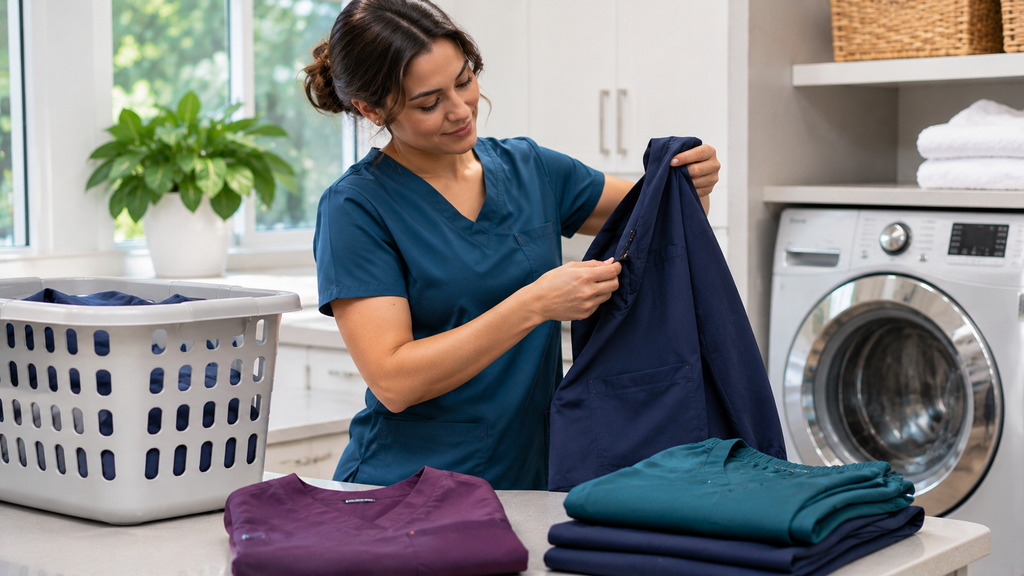
Empty the pockets
Check every pocket before placing scrubs in the washing machine.
Pens, paper, badges, small equipment, and other objects can damage garments or create additional laundry problems.
Close zippers
If the care instructions permit machine washing, closing zippers can help reduce unnecessary contact with other garments.
Secure fasteners
Where appropriate, close snaps, buttons, or other fasteners according to the garment’s care instructions.
Separate colors
Separating colors can reduce the risk of unwanted dye transfer.
Check for stains
Identify visible stains before washing rather than discovering them after the garment has already been dried.
Should Medical Scrubs Be Washed Separately?
There is no universal requirement that every pair of scrubs must be washed separately from all other clothing.
However, healthcare professionals should follow their workplace’s laundering and infection-control requirements.
For routine household laundering, separating garments based on:
- Color
- Fabric type
- Level of soiling
- Care requirements
can make the process easier.
If a workplace provides specific instructions for handling uniforms, those instructions should take precedence over general household laundry practices.
What Water Temperature Should You Use for Scrubs?
The correct water temperature depends on the garment’s care instructions.
Do not automatically assume that hotter water is better.
Higher temperatures can affect some:
- Dyes
- Elastic components
- Stretch fibers
- Fabric finishes
- Synthetic materials
If the care label specifies a particular temperature or washing method, follow it.
The goal is to clean the garment effectively without exposing it to unnecessary stress.
Is Hot Water Better for Cleaning Medical Scrubs?
Not necessarily.
Water temperature should be selected according to the garment’s care instructions and the laundering requirements applicable to the workplace.
A higher temperature can provide certain cleaning benefits in appropriate circumstances, but it can also increase stress on some fabrics.
Healthcare professionals should distinguish between garment-care instructions and facility-specific infection-control or laundering protocols.
When uniforms are subject to occupational or clinical requirements, those requirements should guide the laundering process.
Should You Turn Scrubs Inside Out Before Washing?
Turning some garments inside out can help reduce direct friction on the visible outer surface during washing.
It may be particularly useful for:
- Dark colors
- Printed elements
- Certain finishes
- Garments where color preservation is important
However, it is not a universal requirement.
The care label should remain the primary reference.
How Can You Prevent Scrub Colors From Fading?
Several laundry habits can help preserve the appearance of colored garments.
Follow the care label
Use the recommended washing and drying instructions.
Avoid unnecessary heat
Excessive heat can contribute to fabric stress and may affect some dyes or fibers.
Separate colors appropriately
Wash compatible colors together rather than combining significantly different shades.
Avoid excessive detergent
More detergent does not necessarily produce cleaner clothing.
Do not leave damp clothing sitting for extended periods
Prompt drying can help reduce odor and other laundry problems.
Rotate your wardrobe
Using multiple sets can reduce how frequently the same garments are washed and worn.
How Much Detergent Should You Use?
Use the amount recommended by the detergent manufacturer and appropriate for the washing machine.
Using excessive detergent does not automatically make scrubs cleaner.
Too much detergent can potentially contribute to residue buildup, particularly when the washing process does not provide adequate rinsing.
The appropriate amount depends on factors such as:
- Detergent concentration
- Load size
- Water conditions
- Washing-machine type
- Level of soiling
Follow the detergent and machine instructions rather than estimating based solely on how dirty the scrubs appear.
Can Fabric Softener Be Used on Medical Scrubs?
There is no universal answer.
Some fabric manufacturers may recommend avoiding certain softeners because they can affect specific finishes or performance characteristics.
Always check the garment’s care instructions.
This is particularly important for technical or stretch fabrics where maintaining the original fabric characteristics is part of the garment’s intended performance.
Should You Use Bleach on Medical Scrubs?
Only use bleach if the garment’s care instructions permit it.
Bleach can affect:
- Color
- Fabric fibers
- Elastic components
- Decorative elements
- Certain finishes
A garment that appears white should not automatically be assumed to be bleach-safe.
Always check the care label before using bleach or another strong cleaning agent.
How Should You Remove Stains From Scrubs?
The appropriate treatment depends on the type of stain and the garment’s fabric.
A general approach is:
- Identify the stain.
- Check the garment’s care instructions.
- Treat the stain using a method appropriate for the fabric.
- Avoid aggressive rubbing unless appropriate.
- Wash according to the care label.
- Check the garment before drying.
- Repeat appropriate treatment if necessary rather than immediately applying high heat.
Some stains can become more difficult to remove after heat is applied, so inspecting garments before drying can be useful.
Should You Treat Scrub Stains Immediately?
When practical, addressing a stain sooner can make treatment easier.
Fresh stains may be easier to manage than stains that have remained in the fabric for an extended period.
However, healthcare professionals should use appropriate precautions when dealing with potentially hazardous substances.
If a garment has been contaminated with blood, body fluids, chemicals, or other potentially hazardous materials, follow the applicable workplace or occupational-health procedures rather than relying on ordinary household stain-removal methods.
The CDC provides healthcare guidance and infection-control resources that can help organizations establish appropriate practices. CDC Infection Control
Should You Dry Medical Scrubs on High Heat?
Not unless the garment’s care instructions specifically allow it.
High heat can affect certain:
- Synthetic fibers
- Stretch fibers
- Elastic waistbands
- Garment finishes
- Printed elements
Some garments may tolerate higher temperatures, while others may require lower heat or air drying.
The care label should determine the appropriate drying method.
Is Air Drying Better for Scrubs?
Air drying can be appropriate for garments whose care instructions permit it.
Potential benefits can include reducing exposure to high dryer temperatures and minimizing some forms of heat-related fabric stress.
However, air drying is not automatically required for every scrub garment.
Some fabrics are designed to tolerate machine drying under specific conditions.
Again, the garment’s care label should determine the appropriate method.
How Can You Prevent Scrubs From Shrinking?
Follow the manufacturer’s washing and drying instructions.

Potential causes of unwanted shrinkage or dimensional change can include:
- Excessive heat
- Improper drying
- Incorrect washing conditions
- Repeated exposure to unsuitable temperatures
Do not assume that all scrubs are pre-shrunk or that every fabric blend behaves the same way.
If maintaining a particular fit is important, pay close attention to the garment’s care instructions from the first wash.
How Can You Preserve the Stretch in Scrub Fabric?
Stretch fabrics require appropriate care because repeated heat and mechanical stress can affect their performance over time.
Helpful practices include:
- Following the care label
- Avoiding unnecessary high heat
- Using appropriate washing cycles
- Avoiding excessive mechanical stress
- Storing garments appropriately
- Rotating multiple sets
If a garment contains spandex or another stretch fiber, its care instructions should be followed particularly carefully.
How Can You Prevent Scrubs From Losing Their Shape?
Proper washing and drying can help maintain garment shape.
Also consider:
Avoid overloading the washer
Crowded loads can increase friction and reduce effective movement of water and detergent.
Use the recommended cycle
The garment label may specify a particular cycle or washing method.
Avoid unnecessary heat
High heat can affect certain fibers and elastic components.
Store garments appropriately
Do not leave clean garments compressed in damp or poorly ventilated conditions.
Rotate garments
Frequent rotation can distribute wear.
Why Should You Avoid Overloading the Washing Machine?
An overloaded machine can prevent clothing from moving freely through the wash cycle.
This may affect:
- Cleaning effectiveness
- Rinsing
- Fabric friction
- Wrinkling
- Overall washing performance
It can also make it more difficult to separate heavily soiled garments from lightly worn clothing.
Follow the washing machine manufacturer’s load recommendations.
Should You Wash Scrubs With Towels?
It depends on the care requirements and laundry routine.
Towels can generate substantial lint and may create additional friction during washing.
For that reason, many people prefer to wash towels separately from workwear.
However, the appropriate laundry arrangement depends on the fabrics, colors, machine, and care instructions involved.
Should You Wash Scrubs With Regular Clothes?
It depends on the circumstances.
For ordinary household laundering, compatible garments may be washed together when their care requirements are similar.
However, healthcare professionals should consider:
- Level of soiling
- Workplace requirements
- Fabric type
- Color
- Care instructions
- Potential contamination
If a workplace provides specific uniform-laundering instructions, follow those requirements.
How Should You Handle Heavily Soiled Scrubs?
Heavily soiled garments should not automatically be treated like ordinary everyday clothing.
First determine whether the garment has been exposed to:
- Blood
- Body fluids
- Chemicals
- Medications
- Other potentially hazardous substances
If so, follow workplace or occupational-health procedures.
For ordinary non-hazardous stains, use the garment’s care instructions and an appropriate stain-treatment method.
How Should You Store Clean Medical Scrubs?
Clean scrubs should be stored in a clean, dry environment.
Depending on the garment and available space, options include:
- Folding
- Hanging
- Drawer storage
- Closet shelves
- Dedicated uniform storage
The important considerations are cleanliness, dryness, organization, and avoiding unnecessary compression.
A simple organization system can make it easier to prepare for shifts.
Should Scrubs Be Folded or Hung?
Either method can work depending on the garment.
Folding
Folding can work well for:
- Scrub pants
- T-shirts
- Lightweight tops
- Casual underscrubs
Hanging
Hanging can be useful for:
- Scrub jackets
- Lab coats
- Structured tops
- Garments prone to creasing
The best storage method depends on the garment’s construction and available space.
How Should You Organize a Scrub Wardrobe?
A simple organization system can separate garments by:
- Color
- Type
- Brand or collection
- Workday
- Season
- Fit
For example, scrub tops can be grouped separately from pants and jackets.
Professionals who wear specific colors for different shifts or departments can also organize uniforms by approved color.
This can reduce the amount of time spent preparing for work.
Why Is Uniform Rotation Important?
Wearing the same few garments repeatedly can concentrate wear on those pieces.
Rotating several scrub sets can distribute:
- Washing
- Drying
- Friction
- Stretching
- Daily wear
A rotation can also provide a useful backup if one garment becomes stained or damaged.
For professionals working several shifts each week, having multiple sets can make laundry management easier.
How Many Scrub Sets Should You Own?
There is no universal number.
Consider:
- Shifts per week
- Consecutive shifts
- Laundry frequency
- Drying time
- Workplace requirements
- Personal preference
- Availability of backup uniforms
A practical starting point is enough sets to cover the normal period between laundry cycles, plus at least one backup set.
Professionals working long or consecutive shifts may prefer additional sets.
How Can You Make Scrubs Last Longer?
A consistent maintenance routine can help reduce unnecessary wear.
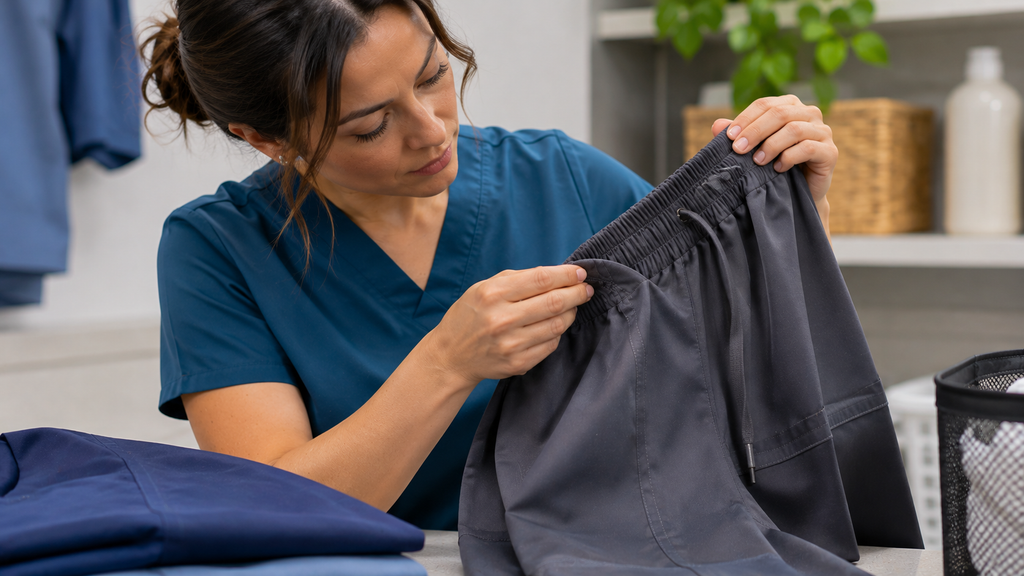
Rotate your garments
Avoid relying on the same one or two sets whenever possible.
Follow care instructions
Use the recommended washing and drying method.
Treat stains appropriately
Do not allow avoidable stains to remain untreated for extended periods.
Avoid excessive heat
Use the temperature recommended for the garment.
Inspect garments regularly
Look for:
- Loose seams
- Damaged zippers
- Weak elastic
- Thinning fabric
- Excessive fading
- Broken closures
Addressing problems early can help determine whether a garment can continue to be used or should be replaced.
How Often Should Medical Scrubs Be Replaced?
There is no fixed replacement schedule for every scrub garment.
Replacement may become appropriate when:
- The garment no longer fits correctly.
- Fabric has become significantly worn.
- Elastic no longer provides adequate support.
- Seams are damaged.
- Zippers or closures fail.
- Color has faded substantially.
- The garment no longer meets workplace requirements.
- The garment cannot be adequately maintained.
The decision should be based on condition and suitability rather than a specific number of months or years.
Should You Replace Scrubs When the Color Fades?
Significant fading can affect the appearance of a professional uniform.
Whether replacement is necessary depends on:
- Workplace requirements
- Degree of fading
- Overall garment condition
- Personal preference
If a facility requires a particular color or a consistent appearance, excessive fading may make replacement appropriate.
How Can You Keep White Scrubs Looking Clean?
White garments can make discoloration more visible than darker colors.
Follow the garment’s care instructions carefully and avoid assuming that stronger cleaning products will always produce better results.
Consider:
- Promptly addressing stains
- Using the recommended detergent
- Following the recommended temperature
- Avoiding unauthorized bleach
- Checking garments before drying
For any potentially hazardous contamination, follow workplace procedures instead of treating the garment as ordinary laundry.
How Can You Keep Dark Scrubs Looking New?
Dark colors can show fading over time.
Helpful habits may include:
- Following the care label
- Avoiding unnecessary heat
- Using compatible laundry loads
- Turning garments inside out where appropriate
- Avoiding excessive detergent
- Rotating garments
Different dyes and fabrics respond differently, so the care label remains the primary guide.
How Should You Care for Scrub Jackets?
Scrub jackets should be treated according to their specific care instructions.
Because jackets may contain:
- Zippers
- Elastic
- Structured panels
- Multiple fabrics
- Specialized finishes
they may require different care from a simple scrub top.
Check the label before washing and drying.
A properly maintained jacket can remain a useful layering piece for changing temperatures during healthcare shifts.
How Should You Care for Lab Coats?
Lab coats can have different fabric compositions and construction from standard scrub tops and pants.
Check:
- Washing instructions
- Drying instructions
- Bleach guidance
- Ironing requirements
- Stain-treatment recommendations
If the lab coat is used in an environment with specific contamination-control requirements, follow the applicable workplace procedures.
How Should You Care for Scrubs With Stretch Fabric?
Stretch garments should be cared for according to their specific instructions.
Avoid assuming that because a garment feels durable, it can tolerate unlimited high heat or aggressive washing.
Pay attention to:
- Water temperature
- Dryer temperature
- Washing cycle
- Detergent recommendations
- Bleach restrictions
Proper care can help preserve the intended flexibility and shape of the garment.
How Can You Reduce Wrinkles in Medical Scrubs?
Some wrinkles can be reduced through appropriate laundering and drying.
Helpful practices can include:
- Avoiding excessive washer loads
- Removing garments promptly after washing
- Following appropriate drying instructions
- Folding or hanging garments soon after drying
If ironing is permitted, follow the garment’s temperature instructions.
Some fabrics should not be exposed to high heat from an iron.
Should You Iron Medical Scrubs?
Only if the garment’s care instructions permit ironing.
Some synthetic or stretch fabrics can be damaged by excessive heat.
If ironing is allowed, follow the recommended temperature.
For garments that do not require ironing, appropriate washing, drying, folding, or hanging may be sufficient to maintain a neat appearance.
What Should You Do With Worn-Out Scrubs?
Before discarding an old scrub garment, determine whether it is still appropriate for work.
A garment with:
- Severe thinning
- Damaged seams
- Broken closures
- Excessive fading
- Permanent stains
- Loss of shape
may no longer be suitable for professional use.
If it is still usable but no longer appropriate for clinical work, it may have another non-work use depending on its condition.
Can Proper Care Save Money on Scrubs?
Proper care can help reduce unnecessary replacement.
Extending the usable life of a garment can mean fewer replacement purchases over time.
However, care should never override workplace requirements or appropriate hygiene practices.
The objective is to maintain garments properly while replacing them when they are no longer suitable for their intended use.
How Should You Build a Low-Maintenance Scrub Wardrobe?
A low-maintenance wardrobe can be built around garments that fit well and have care requirements compatible with the wearer’s routine.
Consider:
- Easy-care fabrics
- Durable construction
- Compatible colors
- Multiple interchangeable tops and pants
- Practical layering pieces
- Appropriate backup sets
When shopping for medical scrubs, review fabric information and care instructions before selecting garments for frequent use.
What Should You Look for When Buying Scrubs That Need Frequent Washing?
If a garment will be worn and washed frequently, consider:
- Fabric composition
- Care requirements
- Construction
- Seam quality
- Stretch recovery
- Color
- Fit
- Pocket design
- Available replacement options
A garment that requires complicated care may be less convenient for someone who works several shifts per week.
How Can You Care for a Large Scrub Wardrobe?
A larger wardrobe benefits from organization.
Try separating garments by:
| Category | Examples |
| Tops | V-neck, mock-wrap, tuckable |
| Pants | Joggers, straight-leg, tapered |
| Length | Petite, regular, tall |
| Layers | Jackets, underscrubs |
| Color | Workplace-approved color groups |
| Condition | Regular rotation, backup sets |
This can make it easier to identify which garments are being used most frequently and which are receiving less wear.
Medical Scrub Care Checklist
| Care Area | Best Practice |
| Before washing | Empty pockets and check care labels |
| Colors | Separate compatible colors |
| Stains | Identify and treat appropriately |
| Washing | Follow garment instructions |
| Detergent | Use the recommended amount |
| Bleach | Use only when permitted |
| Drying | Follow recommended temperature or method |
| Heat | Avoid unnecessary high temperatures |
| Storage | Keep garments clean and dry |
| Rotation | Use multiple sets to distribute wear |
| Inspection | Check seams, elastic, closures, and fabric |
| Replacement | Replace garments when no longer suitable |
Where Can You Find Medical Scrubs Designed for Regular Wear?
Healthcare professionals who need workwear for frequent shifts can evaluate different scrub categories based on fit, fabric, style, and care requirements.
A broad medical scrubs online selection can make it easier to review different styles before building a wardrobe.
Those looking for different fits and professional styles can also explore women’s scrubs or men’s scrubs according to their preferred proportions.
Professionals who want to assess garments in person can visit a medical uniform retailer and review fabrics, fits, and available workwear options.
Frequently Asked Questions
How often should medical scrubs be washed?
Scrubs should be laundered according to the needs of the work environment, level of soiling, workplace requirements, and garment-care instructions. Healthcare professionals should follow any facility-specific laundering or infection-control requirements that apply to their uniforms.
What is the best way to wash medical scrubs?
There is no single method that applies to every scrub garment. Check the care label for the recommended water temperature, cycle, detergent guidance, drying method, and other instructions.
Can you put medical scrubs in the dryer?
Some scrubs can be machine dried, while others may require lower temperatures or another drying method. Always follow the garment’s care instructions rather than assuming that all scrubs can tolerate the same dryer settings.
How can I keep my scrubs from fading?
Follow the garment’s care instructions, separate compatible colors, avoid unnecessary heat, use the recommended amount of detergent, and rotate multiple sets. Dark or brightly colored garments may require particular attention to their care instructions.
How can I make medical scrubs last longer?
Use multiple sets in rotation, follow the manufacturer’s washing and drying instructions, treat stains appropriately, avoid unnecessary heat, and inspect garments regularly for wear. Replace garments when they are no longer suitable for professional use.
Should heavily contaminated scrubs be washed at home?
Potentially contaminated garments should be handled according to applicable workplace, occupational-health, and infection-control procedures. Do not rely on ordinary household laundry practices when a garment has been exposed to hazardous substances or potentially infectious material.
Conclusion
Medical scrubs are designed for repeated use, but frequent washing and demanding work environments naturally place stress on the garments. Proper care can help preserve their fit, color, fabric performance, and overall appearance.
The most important principle is to follow the care instructions provided with each garment. Water temperature, drying method, detergent, bleach use, and other laundry decisions can vary depending on the fabric and construction.
Good laundry habits also make a difference. Empty pockets, separate compatible colors, address stains appropriately, avoid unnecessary heat, and do not overload the washing machine. Once garments are clean, store them in a dry and organized environment and rotate multiple sets to distribute wear.
Healthcare professionals should also distinguish ordinary clothing care from workplace contamination and infection-control requirements. If a garment has been exposed to blood, body fluids, chemicals, or other potentially hazardous substances, the applicable workplace procedures should take priority.
Regular inspection is equally important. Loose seams, damaged closures, weakened elastic, excessive fading, thinning fabric, or changes in fit can indicate that a garment is approaching the end of its useful life.
A well-maintained scrub wardrobe does not need to be complicated. Consistent care, sensible rotation, proper storage, and timely replacement can help healthcare professionals keep their workwear practical and presentable throughout its useful life.